


Your skin's natural radiance isn't just about good genetics or expensive products. It's fundamentally about nourishment at the cellular level. The right vitamin for skin glow can transform dull, tired skin into a complexion that looks healthy, balanced, and luminous from within. Understanding which vitamins matter, how they work, and how to incorporate them into a structured approach makes all the difference between sporadic results and consistent, visible improvement.
The Science Behind Vitamins and Skin Radiance
The concept of using a vitamin for skin glow isn't new, but our understanding of how these nutrients work has become increasingly sophisticated. Vitamins function as essential cofactors in thousands of biochemical reactions that maintain skin health, repair damage, and generate the proteins and lipids that give skin its structure and glow.
When your skin lacks specific vitamins, visible signs appear quickly. Dullness, uneven tone, texture changes, and accelerated aging all signal nutritional gaps at the cellular level. Conversely, when skin receives adequate vitamin support, both internally through diet and externally through topical application, cells can perform their regenerative functions optimally.
How Vitamins Influence Skin at the Cellular Level
Cell turnover, collagen production, melanin regulation, and barrier function all depend on vitamin availability. Without adequate vitamin C, for example, collagen synthesis slows dramatically. Without vitamin A, cell turnover becomes sluggish and irregular. Each vitamin plays distinct roles, yet they work synergistically to create the conditions for radiant skin.
Key cellular processes influenced by vitamins:
- Collagen and elastin synthesis
- Antioxidant defense against free radicals
- Cell membrane integrity and barrier function
- Melanin production and distribution
- DNA repair and cell replication
- Lipid production for skin hydration
The most effective approach combines internal nutrition with targeted topical delivery, ensuring vitamins reach skin cells through multiple pathways.
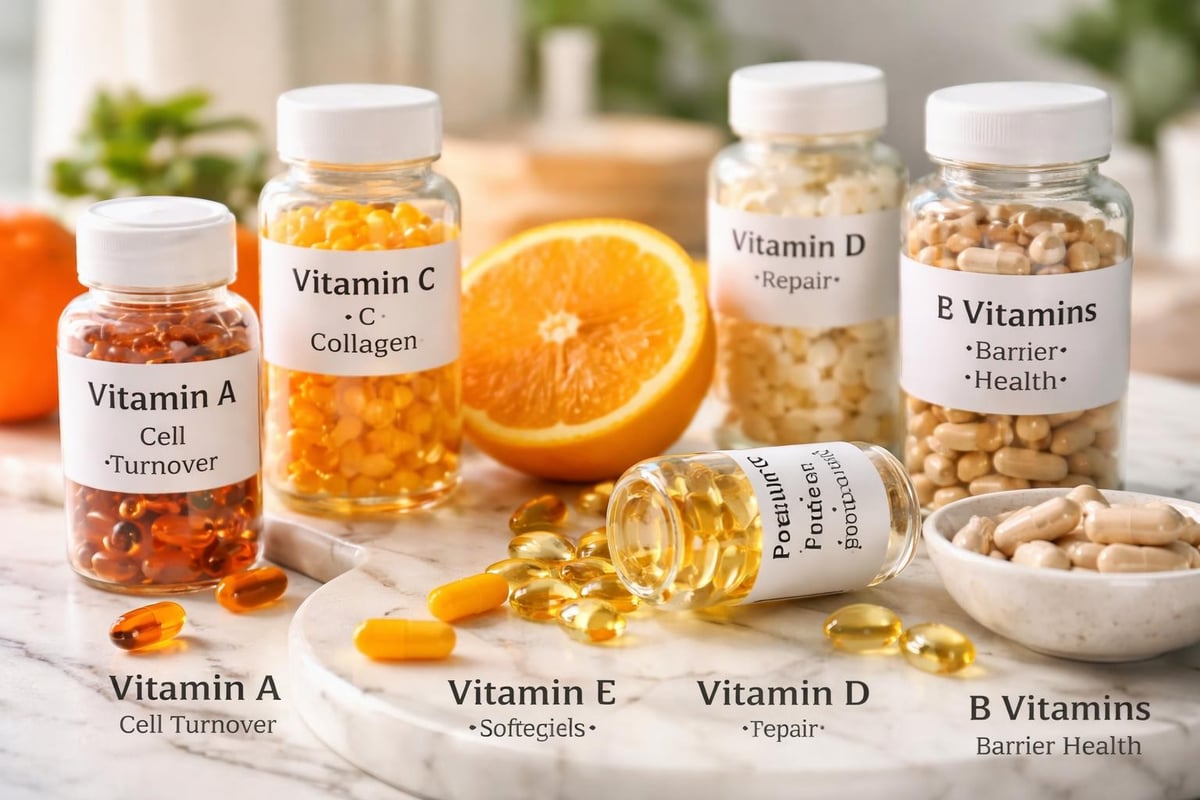
Vitamin C: The Foundation of Radiance
No discussion of vitamin for skin glow would be complete without examining vitamin C in depth. As one of the most researched and proven skin vitamins, ascorbic acid supports multiple pathways that directly influence skin brightness and overall appearance.
Vitamin C's primary mechanism involves collagen synthesis. As an essential cofactor for the enzymes that stabilize collagen molecules, vitamin C directly determines how much functional collagen your skin can produce. More stable collagen means firmer, smoother skin with better light reflection properties, which we perceive as glow.
Antioxidant Protection and Brightening Effects
Beyond collagen, vitamin C neutralizes free radicals before they damage cellular structures. This protective action prevents the oxidative stress that leads to dullness, hyperpigmentation, and premature aging. Additionally, vitamin C interferes with tyrosinase, the enzyme responsible for melanin production, helping to fade existing dark spots and prevent new ones from forming.
Topical vitamin C benefits:
- Reduces appearance of fine lines within 8-12 weeks
- Improves skin firmness and elasticity
- Fades post-inflammatory hyperpigmentation
- Enhances skin's natural sun protection (when combined with SPF)
- Brightens overall skin tone
| Vitamin C Form | Stability | Penetration | Best For |
|---|---|---|---|
| L-Ascorbic Acid | Low | High | Maximum efficacy |
| Ascorbyl Glucoside | High | Moderate | Sensitive skin |
| Tetrahexyldecyl Ascorbate | High | High | Oil-based formulas |
| Sodium Ascorbyl Phosphate | High | Moderate | Acne-prone skin |
The challenge with vitamin C lies in stability and delivery. L-ascorbic acid, the most potent form, oxidizes rapidly when exposed to light, air, or water. This is why formulation matters enormously when selecting a vitamin for skin glow products.
Vitamin A: The Cell Turnover Accelerator
Vitamin A, particularly in its active form as retinoic acid, represents perhaps the most powerful vitamin for skin glow available. Its ability to communicate directly with skin cells through nuclear receptors makes it uniquely effective at driving change.
When vitamin A binds to retinoid receptors in skin cells, it triggers gene expression changes that accelerate cell turnover, normalize keratinization, and stimulate collagen production. This multi-targeted action addresses multiple aging and dullness factors simultaneously.
Retinoids Versus Retinol: Understanding the Spectrum
The vitamin A family includes several forms, each with different potency and skin tolerance profiles. Prescription tretinoin (retinoic acid) works immediately but often causes significant irritation. Over-the-counter retinol requires conversion to retinoic acid but offers a gentler introduction.
Vitamin A derivatives ranked by strength:
- Tretinoin (prescription only)
- Adapalene (prescription and OTC)
- Retinaldehyde
- Retinol
- Retinyl palmitate
For those new to vitamin A, starting with retinol or retinaldehyde allows skin to adapt while still delivering measurable results. Research consistently shows that retinoids improve skin texture, reduce hyperpigmentation, and enhance radiance with consistent use over 12-16 weeks.
The vitamin A approach requires patience and structure. Begin with twice-weekly application, gradually increasing frequency as tolerance builds. Always pair with rigorous sun protection, as vitamin A increases photosensitivity.
Vitamin E: The Protective Shield
While vitamin C and A actively drive change, vitamin E plays a crucial protective role. As a lipid-soluble antioxidant, vitamin E integrates into cell membranes, where it intercepts free radicals before they can cause lipid peroxidation and membrane damage.
This protective function becomes especially important when combining multiple active ingredients. Vitamin E stabilizes vitamin C, enhancing its effectiveness and extending its active life in formulations. Together, they provide more comprehensive antioxidant protection than either alone.
Topical Application Versus Dietary Intake
Vitamin E reaches skin through two pathways: sebum secretion from dietary intake and direct topical application. Both contribute to skin protection, but topical application delivers higher concentrations to the epidermis where environmental damage occurs most intensely.
Alpha-tocopherol, the most biologically active form of vitamin E, works particularly well in emollient formulas where it can integrate into the lipid barrier. This positioning allows it to neutralize reactive oxygen species generated by UV exposure before they damage deeper skin structures.
Vitamin E benefits for skin:
- Reduces inflammation and redness
- Supports barrier repair and hydration
- Prevents oxidative damage from pollution
- Enhances effectiveness of other antioxidants
- Softens and smooths skin texture
For maximum benefit, look for formulas that combine vitamin E with vitamin C and ferulic acid, a combination proven to provide eight times the baseline sun protection.
B Vitamins: The Barrier Builders
The B-complex vitamins, particularly B3 (niacinamide), B5 (pantothenic acid), and B7 (biotin), play essential roles in maintaining skin barrier function and overall health. These vitamins support the production of ceramides and fatty acids that form the mortar between skin cells.
Niacinamide has emerged as a particularly valuable vitamin for skin glow due to its multiple mechanisms of action. It reduces transepidermal water loss, regulates sebum production, minimizes pore appearance, and fades hyperpigmentation through melanin transfer inhibition.
Niacinamide: The Versatile Multitasker
Unlike some vitamins that work best for specific skin types, niacinamide benefits virtually everyone. It's well-tolerated even by sensitive skin, doesn't increase sun sensitivity, and can be combined with most other active ingredients without interaction concerns.
At concentrations of 2-5%, niacinamide delivers measurable improvements in barrier function, hydration, and brightness. Higher concentrations (up to 10%) provide additional benefits for pore refinement and sebum control but may cause mild irritation in some individuals.
| B Vitamin | Primary Function | Skin Benefits |
|---|---|---|
| B3 (Niacinamide) | Barrier support, sebum regulation | Minimizes pores, fades hyperpigmentation |
| B5 (Panthenol) | Hydration, wound healing | Soothes inflammation, enhances moisture |
| B7 (Biotin) | Fatty acid synthesis | Supports healthy skin and hair |
| B9 (Folate) | Cell division | Assists in skin regeneration |
The B vitamins work particularly well in maintenance-focused products designed for daily use, where their gentle yet effective action supports long-term skin health without irritation.
Vitamin D: The Immune Regulator
Often overlooked in vitamin for skin glow discussions, vitamin D plays a critical role in skin cell growth, repair, and immune function. Skin cells contain vitamin D receptors, and when activated, these receptors influence cell proliferation, differentiation, and immune response.
Vitamin D deficiency correlates with various skin conditions, including premature aging, dullness, and impaired wound healing. While sun exposure triggers vitamin D synthesis in skin, this same exposure causes photodamage, creating a paradox that's best resolved through dietary intake and supplementation rather than unprotected sun exposure.
Supporting Skin Renewal and Repair
Vitamin D's influence on skin extends beyond basic health to affect how effectively skin renews itself. It regulates the expression of genes involved in barrier formation, antimicrobial peptide production, and inflammatory response modulation.
For those with compromised skin barriers, inflammatory conditions, or sluggish cell turnover, ensuring adequate vitamin D levels supports the foundation for other treatments to work effectively. Blood testing can confirm vitamin D status, with optimal levels for skin health typically between 40-60 ng/mL.
Vitamin D sources for skin health:
- Fatty fish (salmon, mackerel, sardines)
- Fortified dairy and plant milks
- Egg yolks
- Mushrooms exposed to UV light
- Supplementation (D3 preferred over D2)
While topical vitamin D exists in some formulations, its benefits come primarily through systemic intake rather than direct application.
Creating a Vitamin-Rich Skincare System
Understanding individual vitamins matters, but real transformation comes from a structured approach that combines these nutrients strategically. A system-led method ensures each vitamin serves a specific purpose without redundancy or conflicting actions.
The Target. Boost. Maintain. framework provides a useful model for organizing vitamin application. Targeted treatments deliver high concentrations of active vitamins to specific concerns. Boosting devices and treatments enhance vitamin penetration and effectiveness. Maintenance products provide daily vitamin support to preserve results.
Morning Versus Evening Vitamin Application
Timing vitamin application maximizes their benefits while minimizing potential interactions or photosensitivity issues. Morning routines focus on antioxidant protection with vitamins C and E, shielding skin from daily environmental stress. Evening routines emphasize renewal with vitamin A, allowing overnight repair without sun exposure concerns.
Optimal vitamin timing:
- Morning: Vitamin C, Vitamin E, Niacinamide, SPF
- Evening: Vitamin A (retinol), Niacinamide, Vitamin E
This separation prevents potential interactions (though most are overstated) and aligns each vitamin with its primary purpose. Antioxidants protect during exposure hours, while cell communicators work during repair hours.
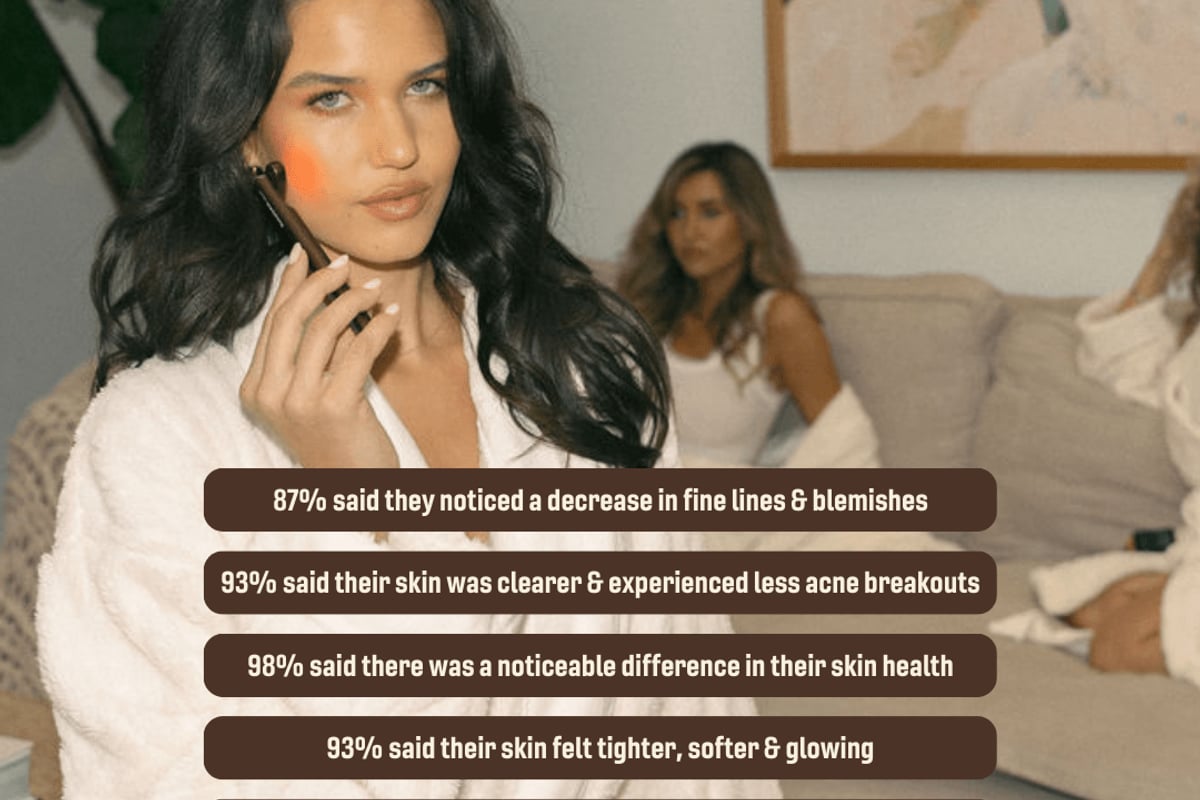
To support targeted vitamin delivery, precision tools can enhance how effectively active ingredients penetrate skin. The Routine. Wand combines red and blue light therapy with gentle vibration to support circulation and help skin respond better to vitamin-rich treatments, whether on the face or body.
Dietary Vitamins Versus Topical Application
The question of internal versus external vitamin delivery deserves careful consideration. Both pathways contribute to skin health, but they work through different mechanisms and offer distinct advantages.
Dietary vitamins support overall skin health by ensuring cells have the raw materials needed for their basic functions. They reach skin through blood circulation, distributing relatively evenly across all skin areas. However, skin is a low-priority organ for nutrient delivery, meaning other organs receive vitamins first.
The Case for Topical Vitamin Delivery
Topical application bypasses the digestive and circulatory systems, delivering vitamins directly to the epidermis and upper dermis. This approach achieves much higher local concentrations than oral supplementation could safely provide, making it ideal for addressing visible concerns like hyperpigmentation, fine lines, or texture irregularities.
The limitation of topical vitamins involves penetration barriers. Skin evolved to keep substances out, so effective formulation requires careful attention to molecular weight, pH, vehicle selection, and enhancing agents that facilitate vitamin penetration without compromising barrier integrity.
| Delivery Method | Concentration at Skin | Whole-Body Effect | Best For |
|---|---|---|---|
| Dietary Intake | Lower, systemic | High | Overall health, baseline support |
| Topical Application | Higher, localized | Minimal | Targeted concerns, visible results |
| Combined Approach | Optimal balance | Moderate | Maximum benefit |
The most effective vitamin for skin glow strategy combines both approaches. Internal nutrition provides the foundation, while topical application addresses specific visible concerns with higher concentrations of active vitamins.
Formulation Quality and Stability Concerns
Not all vitamin products deliver what their labels promise. Stability challenges, poor formulation choices, and inadequate concentrations mean many products provide minimal benefit despite marketing claims.
Vitamin C illustrates these challenges clearly. L-ascorbic acid, the most effective form, oxidizes rapidly when exposed to oxygen, light, or incorrect pH levels. Once oxidized, it not only loses effectiveness but may actually promote free radical damage rather than preventing it.
Identifying Effective Vitamin Formulations
Several factors separate effective vitamin products from ineffective ones. Packaging matters enormously, with opaque, airless containers protecting light and oxygen-sensitive vitamins. pH optimization ensures vitamins remain in their active forms. Concentration thresholds must be met, but higher isn't always better, as excessive concentrations can cause irritation without additional benefit.
Quality indicators for vitamin products:
- Opaque or UV-protective packaging
- Airless pump dispensers for oxidation-prone ingredients
- pH-appropriate formulations (vitamin C around 3.5, retinol around 5.5-6)
- Clinical concentrations (vitamin C 10-20%, retinol 0.25-1%, niacinamide 2-10%)
- Recent manufacture dates
- Proper storage instructions
For vitamin A products, encapsulation technology can enhance stability while reducing irritation. Microencapsulated retinol releases gradually, providing sustained activity with less inflammatory response than traditional retinol formulations.
Addressing Common Vitamin Application Mistakes
Even with quality products, application errors can undermine results or cause unnecessary irritation. Understanding common mistakes helps optimize your vitamin for skin glow approach.
The most frequent error involves using too much too soon. Starting with daily vitamin A application, for instance, often causes retinization, the adjustment period marked by dryness, peeling, and sensitivity. This reaction discourages continued use right when skin is beginning to adapt.
Building Tolerance and Maximizing Results
Gradual introduction allows skin to upregulate the enzymes and processes needed to handle active vitamins without overwhelming its adaptive capacity. For vitamin A, this might mean twice-weekly application for two weeks, then every other day for two weeks, before attempting daily use.
Progressive vitamin introduction schedule:
- Weeks 1-2: Apply twice weekly
- Weeks 3-4: Apply every other day
- Weeks 5-6: Apply five days weekly
- Weeks 7+: Daily application (if tolerated)
Another common mistake involves neglecting supporting ingredients. Vitamins work best within a complete routine that includes hydration, barrier support, and sun protection. Using vitamin A without adequate moisturization, for example, exacerbates dryness and reduces tolerability.
Combining too many active vitamins simultaneously can also overwhelm skin. While vitamins C and E work synergistically, adding vitamin A, multiple acids, and other actives in the same routine often causes irritation that forces you to stop everything, losing ground on all fronts.
Vitamin Combinations That Enhance Effectiveness
Strategic vitamin pairing amplifies benefits beyond what individual vitamins provide. Understanding which combinations work synergistically helps design more effective routines.
The vitamin C, E, and ferulic acid combination represents the gold standard for antioxidant protection. Research demonstrates this trio provides superior photoprotection and stability compared to any single ingredient alone. Vitamin E regenerates oxidized vitamin C, extending its active life, while ferulic acid stabilizes both.
Complementary Vitamin Pairings
Niacinamide pairs well with almost everything, making it an excellent daily vitamin for skin glow inclusion. It works alongside vitamin C (despite outdated warnings about niacin formation), vitamin A, and antioxidants without interaction concerns. Its barrier-supporting properties actually help other ingredients work more effectively by improving overall skin health.
Effective vitamin combinations:
- Vitamin C + Vitamin E + Ferulic Acid (morning antioxidant protection)
- Vitamin A + Niacinamide (evening renewal and barrier support)
- Vitamin B5 + Vitamin E (hydration and barrier repair)
- Vitamin D (internal) + Vitamin A (topical) (comprehensive renewal support)
Avoid combining vitamin A with direct acids (AHAs, BHAs) in the same application, as the combined irritation potential often outweighs any theoretical benefits. Instead, alternate these ingredients on different evenings or use acids in morning routines and vitamin A at night.
Measuring Results and Adjusting Your Approach
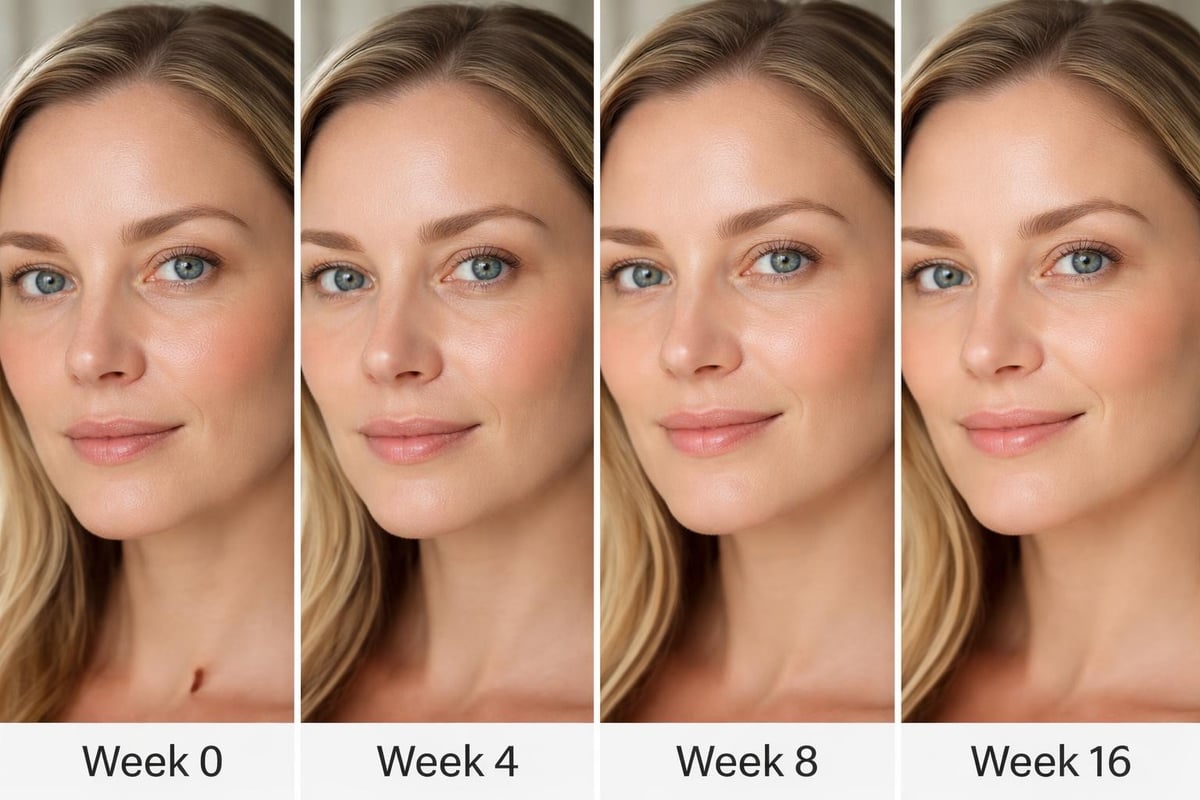
Vitamin-based improvements unfold gradually, requiring patience and objective measurement to track progress. Subjective assessment often misses subtle improvements that become obvious when comparing photos taken weeks apart.
Establish a documentation system with consistent lighting, camera distance, and facial positioning. Weekly photos provide visual evidence of changes in texture, tone, and overall radiance that daily mirror checks might miss.
Timeline Expectations for Vitamin Results
Different vitamins work on different timescales. Antioxidant vitamins like C and E provide some immediate benefits through hydration and protection, but their cumulative effects on tone and brightness emerge over 4-8 weeks. Vitamin A operates on a longer timeline, with visible texture and tone improvements typically appearing after 12-16 weeks of consistent use.
Expected timelines for vitamin benefits:
- 2-4 weeks: Improved hydration, reduced inflammation
- 4-8 weeks: Brighter tone, fading of recent marks
- 8-12 weeks: Texture refinement, pore appearance reduction
- 12-16 weeks: Fine line softening, significant tone evening
- 16+ weeks: Comprehensive skin quality improvement
If you're not seeing expected progress at these checkpoints, reassess your approach. Common issues include insufficient concentration, poor product stability, inconsistent application, or inadequate supporting routine elements like hydration and sun protection.
Vitamin Needs Across Different Skin Types
While fundamental vitamin requirements remain consistent across skin types, how you deliver these nutrients and what concentrations you use should vary based on your skin's specific characteristics and concerns.
Oily, acne-prone skin often benefits from higher niacinamide concentrations (5-10%) for sebum regulation, while sensitive skin might start with 2-3% to minimize any potential irritation. Vitamin A tolerance also varies significantly, with resilient skin potentially handling 1% retinol while sensitive skin requires encapsulated formulations or retinaldehyde alternatives.
Customizing Vitamin Application by Skin Type
Dry skin requires more emollient vitamin delivery vehicles that support barrier function while delivering active ingredients. Vitamin E-rich formulas, vitamin B5 for hydration, and gentle vitamin A derivatives prevent the excessive dryness that undermines results.
| Skin Type | Priority Vitamins | Delivery Preference | Special Considerations |
|---|---|---|---|
| Oily/Acne-Prone | B3, A, C | Lightweight serums, gels | Higher active concentrations tolerated |
| Dry/Sensitive | E, B5, gentle A | Rich creams, oils | Start low, increase slowly |
| Combination | B3, C, moderate A | Layered approach | Adjust by zone if needed |
| Mature | A, C, E | Multi-step system | Focus on renewal and protection |
Hyperpigmentation-prone skin, regardless of type, prioritizes vitamins C, A, and B3 for their melanin-regulating properties. Consistency matters more than concentration for fading existing spots and preventing new ones.
Supporting Vitamins with Professional Treatments
While daily vitamin application forms the foundation of a vitamin for skin glow strategy, professional treatments can accelerate and enhance results. Chemical peels, microneedling, and laser treatments create controlled injury that triggers repair processes, and vitamin-rich post-treatment care optimizes healing and outcome.
Post-procedure skin is uniquely receptive to vitamin penetration. The temporary barrier disruption allows deeper vitamin delivery, making this an ideal time for targeted vitamin therapy. However, this same vulnerability requires careful ingredient selection to avoid irritation or adverse reactions.
Integrating Professional and At-Home Vitamin Care
The weeks following professional treatments represent a critical window for vitamin application. Vitamin C supports collagen synthesis during the healing phase, while vitamin E reduces inflammation and accelerates barrier repair. Vitamin A, however, should typically be paused for 5-7 days post-treatment to prevent excessive irritation.
Professional treatment and vitamin integration:
- Days 1-3 post-treatment: Vitamin E, vitamin B5, gentle hydration only
- Days 4-7: Add vitamin C (lower concentration)
- Days 8-14: Resume niacinamide, consider gentle vitamin A
- Day 15+: Return to full vitamin routine
This staged approach allows skin to heal while still benefiting from vitamin support, optimizing both recovery and long-term results from professional interventions.
The Role of Vitamin-Rich Nutrition for Skin
External vitamin application addresses visible concerns, but internal nutrition provides the raw materials for fundamental skin health. A diet rich in vitamin-containing whole foods supports the cellular processes that generate healthy, glowing skin from within.
Vitamin C-rich foods like citrus, berries, and capsicum provide the substrate for collagen synthesis. Vitamin A from orange and dark green vegetables supports cell turnover and renewal. Vitamin E from nuts, seeds, and plant oils protects cell membranes. Together, these dietary vitamins create the foundation that allows topical treatments to achieve their full potential.
Building a Skin-Supporting Nutrition Plan
Focus on variety and color diversity, as different hues signal different vitamin and antioxidant profiles. Orange foods provide beta-carotene (provitamin A), dark leafy greens offer vitamins K, C, and folate, while nuts and seeds deliver vitamin E and healthy fats.
Vitamin-rich foods for skin glow:
- Vitamin C: Capsicum, strawberries, kiwi, citrus, broccoli
- Vitamin A: Sweet potato, carrots, spinach, kale, pumpkin
- Vitamin E: Almonds, sunflower seeds, avocado, olive oil
- Vitamin D: Fatty fish, fortified foods, egg yolks
- B Vitamins: Whole grains, legumes, leafy greens, animal proteins
Supplementation can fill gaps, but whole foods provide vitamins in their natural context with cofactors and compounds that enhance absorption and utilization. For most people, a balanced diet rich in vegetables, fruits, whole grains, healthy fats, and quality proteins provides adequate vitamins for skin health.
Vitamin Stability During Storage and Use
Even the best-formulated vitamin products degrade if stored improperly. Understanding how to maintain vitamin stability from purchase through final use ensures you receive the full benefit of these active ingredients.
Vitamin C products exemplify storage sensitivity. Clear glass bottles allow light penetration that accelerates oxidation. Jars that expose the entire product to air each time you open them compound the problem. Once vitamin C oxidizes, it shifts from colourless or pale yellow to dark yellow or brown, signaling degradation.
Proper Storage Practices for Vitamin Products
Keep vitamin C formulations in cool, dark locations. Some people refrigerate them, though this isn't necessary if you store them away from heat and light. Use products within 3-6 months of opening, regardless of the printed expiration date, as oxidation accelerates once packaging is breached.
Vitamin A products are less oxidation-prone but still benefit from cool, dark storage. Avoid bathroom storage where temperature and humidity fluctuate dramatically. Instead, keep vitamin products in a bedroom drawer or climate-controlled cabinet.
Storage best practices:
- Store in cool, dark locations (15-25°C)
- Keep lids tightly closed between uses
- Use airless pumps or opaque bottles when possible
- Finish opened products within 3-6 months
- Discard products that change colour, smell, or texture
- Consider refrigeration for vitamin C serums
These simple practices extend product efficacy and ensure you receive the full benefit of your vitamin for skin glow investment.
Addressing Vitamin Sensitivity and Reactions
Not everyone tolerates all vitamins equally. Sensitivity reactions, while generally mild, can occur with any vitamin, particularly when starting new products or using high concentrations.
Vitamin A causes the most common adjustment reactions. Retinization, characterized by dryness, flaking, redness, and temporary breakouts, affects many new users during the first 2-4 weeks. This represents normal adaptation rather than true sensitivity, though the experience can be uncomfortable enough to discourage continued use.
Managing and Minimizing Vitamin Reactions
True vitamin sensitivity appears as immediate burning, stinging, hives, or severe redness that doesn't subside. This requires discontinuing the product and potentially avoiding that vitamin or formulation type altogether. More commonly, reactions represent normal adjustment that improves with patience and proper technique.
Strategies for managing vitamin sensitivity:
- Start with lower concentrations and increase gradually
- Use every third night initially, increasing frequency as tolerated
- Apply to clean, completely dry skin (dampness increases penetration and irritation)
- Layer over moisturizer initially to buffer irritation
- Reduce frequency if irritation becomes uncomfortable
- Ensure adequate hydration and barrier support
For vitamin C, sensitivity often relates to pH rather than the vitamin itself. L-ascorbic acid requires a low pH (around 3.5) for stability and penetration, but this acidity can irritate sensitive skin. In these cases, trying different vitamin C derivatives at higher pH levels often solves the problem.
Long-Term Vitamin Use and Skin Adaptation
Your skin's response to vitamins evolves over time. Initial dramatic improvements often plateau as skin reaches a new equilibrium, leading some to question whether continued use remains worthwhile. Understanding this adaptation helps maintain realistic expectations and appropriate commitment.
Vitamin A demonstrates this pattern clearly. The first 12-16 weeks often bring visible transformation in texture, tone, and clarity. After this initial improvement phase, changes become subtler and more gradual. However, stopping vitamin A typically results in regression over 2-3 months as cell turnover slows and collagen production returns to baseline.
Maintaining Results Through Consistent Application
The plateau doesn't signal ineffectiveness but rather successful achievement of your skin's optimal function under vitamin support. Continued application maintains these improvements while preventing the gradual decline that would occur without vitamin support.
Long-term vitamin strategy:
- Maintain consistent application even after reaching desired results
- Adjust concentrations or forms if true tolerance develops (rare)
- Continue supporting practices (hydration, sun protection, nutrition)
- Accept slower improvement rate as normal after initial transformation
- Take monthly progress photos to track subtle ongoing changes
Think of vitamins as supporting skin function rather than fixing a temporary problem. Just as you wouldn't stop brushing your teeth once they're clean, you shouldn't stop using effective vitamins once skin improves.
Achieving genuine skin radiance requires understanding which vitamins matter, how they work, and how to integrate them into a disciplined, consistent approach. The right vitamin for skin glow strategy combines internal nutrition with targeted topical delivery, creating the conditions for long-term skin confidence rather than temporary results. If you're ready to build a structured, effective routine that delivers measurable transformation, Routine. Beauty offers a complete system designed around precision, simplicity, and sustainable skin health. Explore how the Target. Boost. Maintain. ecosystem can transform your approach to radiant skin.

