


Building an effective skin care combo isn't about collecting products or chasing viral trends. It's about understanding how treatments, boosters, and maintenance formulas work together to create visible, lasting change. In 2026, skincare has shifted from single-hero products toward system-led thinking, where each element has a defined role and contributes to a larger strategy. Whether you're addressing pigmentation, texture, or simply maintaining clarity, the right combination approach transforms isolated routines into coordinated results.
Understanding the System-Led Approach to Skincare
A skin care combo built on structure rather than impulse delivers more consistent outcomes than randomly layered products. The traditional approach of buying individual serums, creams, and treatments without a clear framework often leads to duplication, irritation, or simply wasted effort.
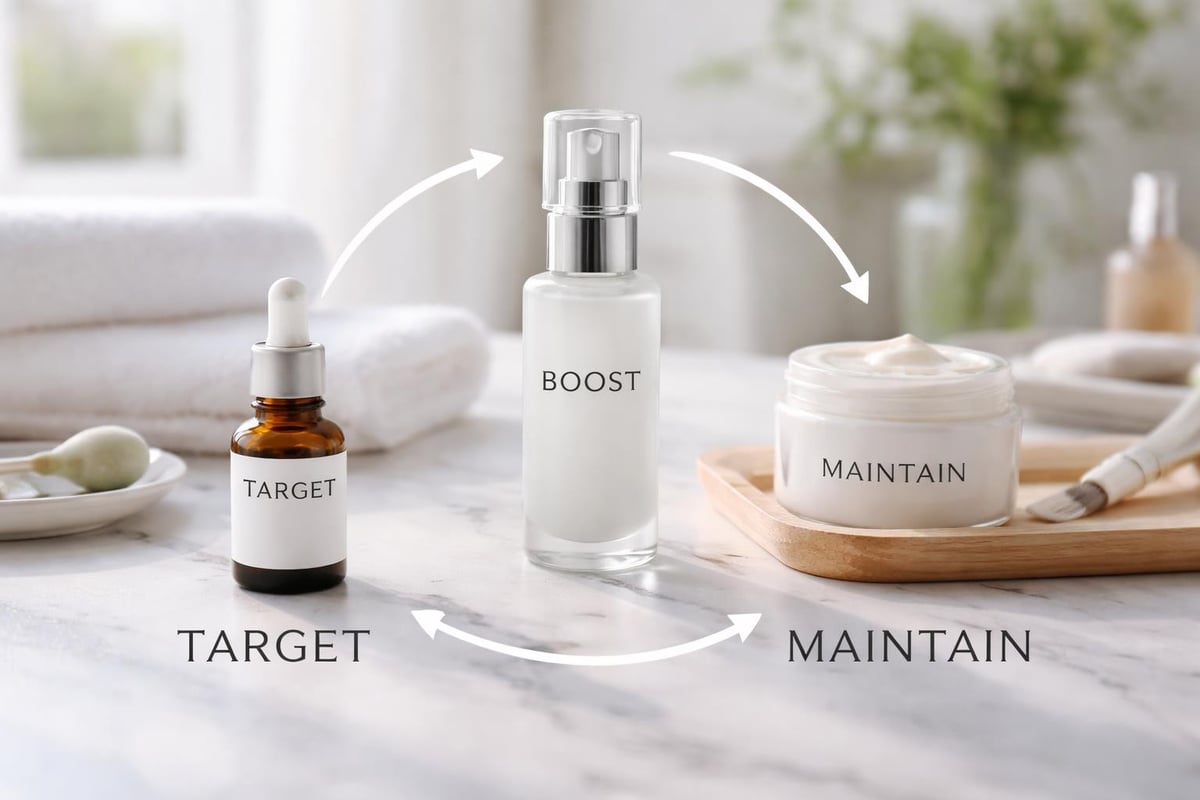
Modern skincare ecosystems are built on three core functions:
- Target: Precision treatments that address specific concerns with concentrated actives
- Boost: Supporting tools and formulas that amplify treatment absorption and response
- Maintain: Daily-use products that protect results and sustain skin health over time
This framework removes guesswork. Instead of wondering whether your moisturiser conflicts with your serum, you're working within a system where skin care regimens are designed with clear roles for each product.
Why Single Products Fail Without Context
Isolating one "miracle" ingredient or product ignores how skin actually responds to care. Your skin doesn't recognise brand boundaries or marketing claims. It responds to active delivery, absorption timing, barrier support, and cumulative consistency.
A powerful retinol serum loses effectiveness if applied over heavy occlusives. A brilliant vitamin C treatment degrades when layered incorrectly. Even the most scientifically backed formulas need compatible partners to perform as intended.
Building Your Foundation: The Target Phase
The targeting phase of any skin care combo focuses on addressing your primary concerns with precision and control. This isn't about applying actives everywhere or treating your entire face with high-strength formulas.
Modern targeting involves controlled delivery to specific zones. Whether you're working on post-inflammatory marks, uneven texture, or localised pigmentation, effective targeting means getting actives exactly where they're needed without unnecessary exposure to surrounding tissue.
| Target Method | Best For | Key Advantage |
|---|---|---|
| Dissolving micro-tips | Dark spots, texture, marks | Precise placement, direct delivery |
| Concentrated serums | Broad concerns (full face) | Even distribution, layering flexibility |
| Spot treatments | Isolated blemishes, breakouts | High strength without whole-face exposure |
Ingredient Synergies in Targeted Treatments
When building a targeting strategy, understanding ingredients that work well together prevents both irritation and disappointing results. Peptides pair beautifully with niacinamide for barrier support while brightening. Vitamin C and ferulic acid create antioxidant synergy.
Avoid these common targeting conflicts:
- Retinoids + high-strength acids (unless alternating nights)
- Multiple vitamin C formulas layered simultaneously
- Benzoyl peroxide + retinol in the same application
- Copper peptides + direct acids or vitamin C
The most effective skin care combo approaches targeting with restraint. One or two precision treatments addressing your top concerns will outperform five competing actives fighting for absorption.
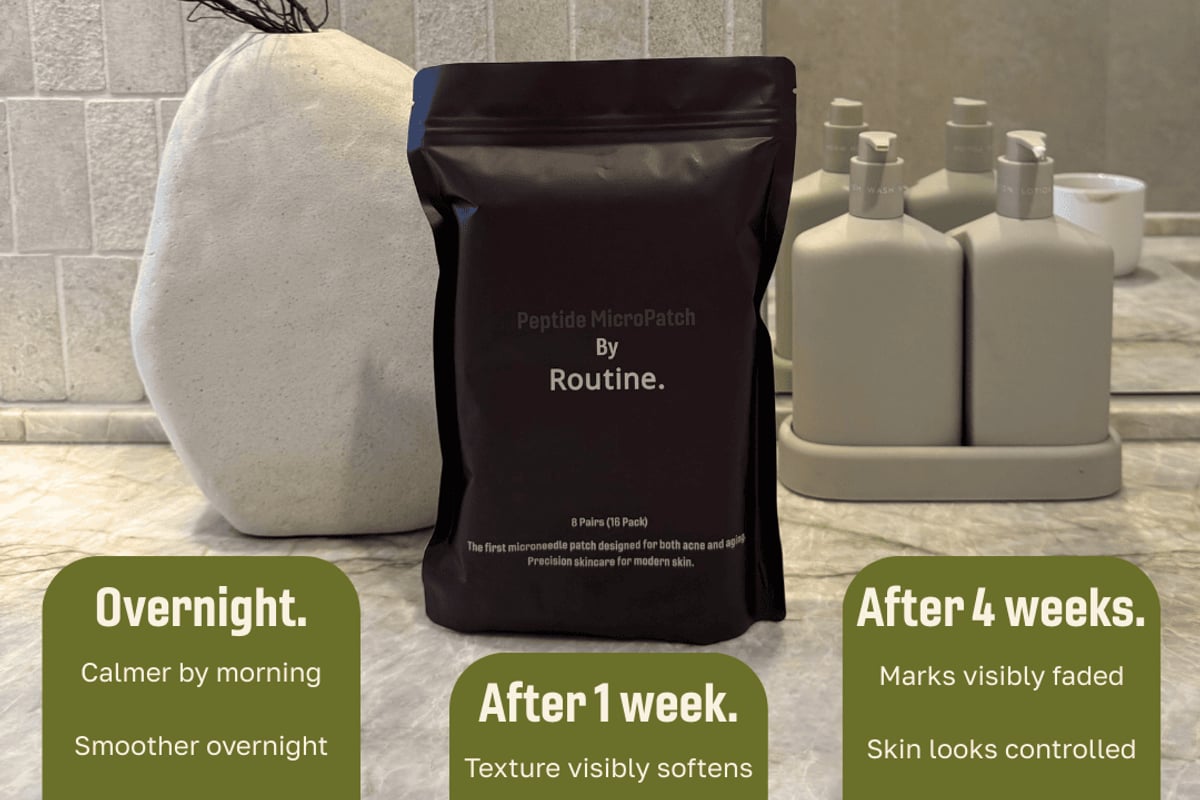
For marks and textured areas that need concentrated improvement, tools that deliver actives directly into the concern zone offer control traditional serums cannot match. The Routine. Peptide MicroPatch exemplifies this approach with dissolving micro-tips that place brightening and smoothing peptides exactly where you position the patch, allowing for targeted absorption without affecting surrounding skin.
Amplifying Results: The Boost Phase
Boosting transforms good skincare into exceptional outcomes. This phase uses tools and techniques that enhance how your skin receives and responds to targeted treatments.
Light therapy has evolved beyond professional settings into daily-use tools that support cellular response. Red light wavelengths improve circulation and support collagen activity. Blue light addresses bacteria and helps calm reactive skin. When integrated into a skin care combo, these wavelengths prepare skin to respond more effectively to topical actives.
Timing and Sequencing for Maximum Absorption
The order you apply products dramatically affects their performance. Boosting isn't just about adding more products but optimising when and how each element reaches your skin.
Standard application sequence:
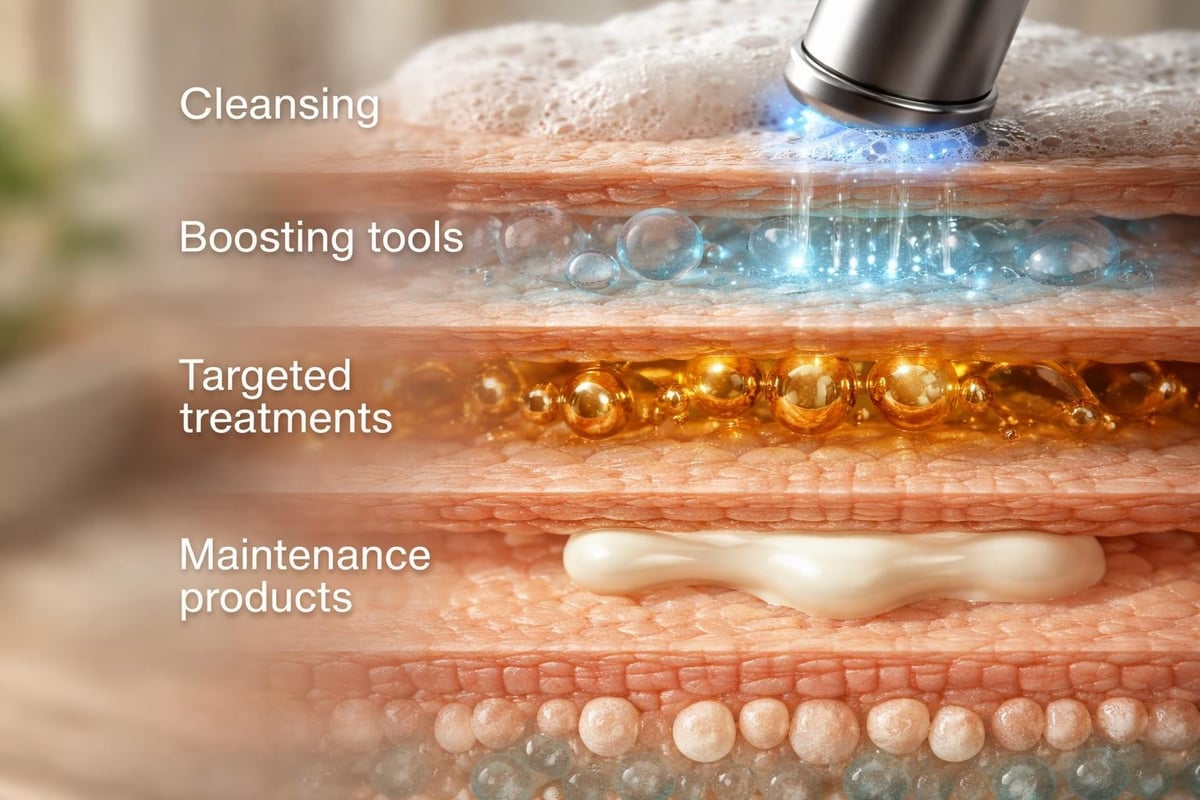
- Cleanse thoroughly to remove barriers to absorption
- Apply light therapy or gentle vibration tools to stimulate response
- Layer targeted treatments from thinnest to thickest consistency
- Seal with maintenance formulas that protect without blocking penetration
Waiting 30-60 seconds between layers allows each product to settle before the next application. This prevents pilling, improves absorption, and reduces the chance of ingredient interactions at the skin surface.
Physical Tools That Enhance Treatment Response
Beyond topical products, physical modalities amplify how skin receives care. Gentle vibration increases microcirculation without causing trauma. Temperature variation (cool tools for calming, slightly warm for circulation) affects how quickly actives penetrate.
The key is consistency without aggression. Your skin care combo should include tools you'll actually use daily, not devices that require 30-minute sessions you'll abandon after two weeks.
Maintaining Results: The Foundation That Sustains Change
Targeting creates change. Boosting amplifies it. But maintenance protects and extends results over weeks, months, and years. This phase often receives the least attention yet determines whether your skin care combo delivers lasting improvement or temporary results.
Maintenance formulas serve multiple functions simultaneously. They hydrate, support barrier integrity, provide antioxidant protection, and help skin stay calm and receptive to ongoing treatments. Unlike targeting products designed for specific concerns, maintenance works across your entire complexion to sustain overall health.
| Maintenance Goal | Key Ingredients | Application Timing |
|---|---|---|
| Hydration balance | Hyaluronic acid, glycerin, ceramides | Morning and evening |
| Barrier protection | Fatty acids, cholesterol, niacinamide | After treatments, before SPF |
| Antioxidant defence | Vitamin E, green tea, resveratrol | Morning (under SPF) |
| Soothing support | Centella, allantoin, beta-glucan | After active treatments |
Balancing Treatment Strength With Skin Comfort
The most aggressive skin care combo isn't the most effective. Pushing skin past its tolerance creates inflammation, disrupts barrier function, and ultimately slows the very improvements you're seeking.
Effective skincare routines for combination skin demonstrate how maintenance formulas adapt to different zones. Your T-zone might need lighter, gel-based hydration while cheeks benefit from richer barrier support.
Maintenance products should feel invisible once absorbed. If your skin feels tight, greasy, or reactive after your routine, your maintenance phase needs adjustment. The right formulas support treatment tolerance, allowing you to maintain consistent targeting without disruption.
Customising Your Combination for Different Skin Goals
Not every skin care combo serves the same purpose. Your routine structure should reflect your primary concerns, skin type, and lifestyle realities.
For Pigmentation and Uneven Tone
Target phase: Vitamin C, tranexamic acid, or targeted peptide delivery to marks
Boost phase: Light therapy to support cellular turnover and reduce inflammation
Maintain phase: Niacinamide-rich hydrators, broad-spectrum antioxidants, consistent SPF
Pigmentation responds to patience and precision more than product quantity. Studies examining high-potency, multimechanism skincare regimens show that structured combinations addressing multiple pathways (melanin production, inflammation, cellular turnover) outperform single-ingredient approaches.
For Texture and Refinement
Improving skin texture requires both exfoliation and barrier support. Too much of the former without the latter creates sensitised, rough skin rather than smooth refinement.
Effective texture combinations include:
- Gentle chemical exfoliation (AHAs, BHAs, or enzymes) 2-3 times weekly
- Peptide or retinoid treatments for cellular renewal
- Rich barrier-supporting maintenance to prevent over-exfoliation damage
- Light therapy to calm inflammation and support healing
The mistake many make when addressing texture is over-exfoliating while under-hydrating. Your skin care combo should smooth without stripping.
For Clarity and Breakout Management
Managing breakouts requires balancing antibacterial action with barrier protection. Harsh, drying formulas might reduce immediate blemishes but create long-term sensitivity and rebound oil production.
Modern clarity-focused combinations emphasise barrier respect. Blue light therapy addresses bacteria without chemical harshness. Niacinamide regulates sebum while supporting barrier strength. Lightweight hydrators prevent compensatory oil production.
Key principle: Your skin care combo should reduce breakouts without creating new problems through over-treatment.
Common Combination Mistakes to Avoid
Even with quality products, poor combination strategy undermines results. These patterns appear repeatedly in failed skincare approaches.
Mistake One: Mixing Too Many Actives Simultaneously
More actives don't equal more results. When you layer retinol, vitamin C, multiple acids, and peptides in one routine, you're creating competition for absorption, increasing irritation risk, and making it impossible to identify what's actually working.
Better approach: Rotate actives by day or time of application. Use vitamin C in the morning, retinoids at night. Exfoliating acids on alternate evenings from retinoids.
Mistake Two: Ignoring Skin Barrier Health
Chasing results while ignoring barrier function is like running a marathon while injured. You might make progress briefly, but you'll ultimately break down.
Signs your skin care combo is compromising barrier health include increased sensitivity, persistent redness, products that previously felt fine now stinging, and rough texture despite treatment.
Mistake Three: Inconsistent Application
A perfect skin care combo applied sporadically delivers worse results than a basic routine used consistently. Skin improvement is cumulative. Actives need regular presence to create change.
Dermatologists emphasise that consistency matters more than product cost or active concentration. A mid-strength retinoid used four nights weekly outperforms a high-strength formula used randomly.
Mistake Four: No Clear Structure
Buying products without understanding their role in your routine creates chaos. You might have three targeting products but no maintenance support. Or excellent hydrators but no actual treatments creating change.
Before adding any product, ask: What is this doing that nothing else in my routine does? If you can't answer clearly, you probably don't need it.
Adapting Your Routine Across Seasons and Life Stages
Your skin care combo shouldn't remain static year-round. Environmental factors, hormonal changes, stress levels, and seasonal shifts all affect how your skin responds to products.
Summer Adjustments
Higher humidity, increased UV exposure, and more time outdoors require lighter textures and enhanced antioxidant protection. Your targeting phase might remain consistent, but maintenance formulas should shift toward gel-based hydrators and reliable SPF becomes non-negotiable.
Summer combination strategy:
- Maintain targeting treatments for consistency
- Switch to lighter, water-based maintenance products
- Add or increase antioxidant serums under SPF
- Consider reducing exfoliation frequency if more sun exposure

Winter Protection
Cold air, indoor heating, and low humidity stress skin barriers. Your skin care combo needs richer maintenance support while potentially scaling back aggressive targeting to prevent over-sensitivity.
Winter is ideal for more intensive treatment phases since sun exposure typically decreases. Many choose this season for retinoid introduction or more frequent exfoliation, provided barrier support keeps pace.
Hormonal and Age-Related Shifts
Perimenopause, pregnancy, or hormonal treatments change how skin responds to actives. Your previously perfect skin care combo might suddenly feel too harsh or insufficient.
Listen to your skin rather than forcing products that no longer suit. Adaptation isn't failure. It's intelligent skincare management.
Integration Versus Isolation: The Multi-Brand Question
One common debate in building a skin care combo centres on whether products should come from a single brand or be mixed across multiple lines. The answer depends less on brand loyalty and more on whether products work well together and serve distinct roles.
Advantages of system-designed combinations:
Products formulated to work together reduce guesswork around compatibility. pH levels, ingredient concentrations, and application sequences are pre-optimised. You spend less time researching interactions and more time seeing results.
Advantages of custom-mixed routines:
Flexibility to choose best-in-class for each function. If one brand excels at vitamin C but another offers superior barrier support, mixing allows you to access both strengths.
The reality is that ingredient knowledge matters more than brand boundaries. Understanding how actives interact, appropriate concentrations, and sequencing principles allows you to build effective combinations regardless of packaging.
Advanced Combination Techniques: Layering and Cocktailing
As your understanding deepens, techniques like skin-care cocktailing allow for sophisticated customisation. This involves intentionally mixing or layering products to create effects neither delivers alone.
Strategic Layering for Enhanced Penetration
Applying a hydrating essence before targeted treatments can improve active delivery. The moisture temporarily plumps skin, creating better penetration channels. Similarly, applying treatments to slightly damp skin enhances absorption for water-based actives.
Effective layering principles:
- Water-based products before oil-based
- Thinnest consistency to thickest
- Treatments before moisturisers
- Active products on clean, prepared skin
Cocktailing for Custom Concentration
Mixing products allows concentration adjustment. If a retinoid feels too strong, mixing it 1:1 with your moisturiser reduces strength while maintaining consistency. A too-gentle vitamin C serum can be boosted by adding a few drops of a higher concentration formula.
Caution: Only cocktail compatible ingredients. Research interactions before experimenting, and introduce combinations gradually to monitor response.
Measuring Success: What Effective Combination Looks Like
How do you know your skin care combo is working? Effective routines produce measurable changes over time, not overnight transformations followed by plateaus.
| Timeframe | Expected Signs of Effective Routine |
|---|---|
| 2 weeks | Improved texture, better product absorption, skin feels balanced |
| 4-6 weeks | Visible reduction in targeted concerns, even tone, consistent clarity |
| 3 months | Sustained improvement, tolerance to actives without sensitivity |
| 6+ months | Long-term change in skin behaviour, reduced need for aggressive intervention |
Track progress with consistent lighting photos rather than relying on memory. Skin changes gradually, and daily observation can obscure progress that's obvious when comparing images weeks apart.
When to Modify Your Approach
Persistent irritation, worsening of target concerns, or plateau after initial improvement all signal needed adjustments. Your skin care combo should evolve as your skin responds and changes.
Don't abandon an approach after one week of perceived stagnation. But also don't persist with a routine that's actively causing problems for months while hoping it will eventually work.
Building Sustainable Habits Around Your Routine
The most scientifically perfect skin care combo fails if you can't maintain it. Sustainability requires realistic time commitment, affordable replenishment, and genuine enjoyment of the process.
Simplification Strategies
Time-pressed mornings: Streamline to cleanser, single treatment or combo product, SPF
Comprehensive evenings: Full sequence of cleanse, target, boost, maintain
This asymmetric approach maintains results without requiring 20-minute routines twice daily. Most targeting treatments work best at night anyway, when skin is in repair mode and UV exposure isn't a concern.
Product Longevity and Routine Economics
Calculate actual cost per use rather than package price. A $90 serum used sparingly for six months costs less per application than a $30 cream depleted in four weeks.
Efficiency considerations for your skin care combo:
- Precision treatments (patches, spot applications) use less product than full-face application
- Quality maintenance products that multi-task reduce total product count
- Tools with one-time cost but ongoing use value provide long-term economy
Sustainable routines balance investment with realistic long-term commitment. Building a routine you can't afford to maintain sets you up for inevitable disruption.
The Future of Combination Skincare
Personalisation technology continues advancing, but the core principle remains unchanged: effective skincare requires structure, compatible ingredients, and consistency. Whether guided by customised regimen systems or self-directed research, successful combination approaches share common elements.
Emerging trends in skin care combo thinking:
- Microbiome-supporting formulas that enhance skin's natural defence systems
- At-home devices that previously required professional settings
- Ingredient transparency allowing smarter self-directed combinations
- System-designed ecosystems replacing random product accumulation
The shift from product-centric to system-centric thinking marks the biggest change in skincare philosophy over recent years. Rather than asking "what's the best serum?" the question becomes "what role does this play in my complete approach?"
This structural thinking applies whether you're addressing specific concerns or maintaining already-healthy skin. Every product should justify its presence through clear function within your larger strategy.
Building an effective skin care combo requires moving beyond product collection toward strategic system thinking, where targeting, boosting, and maintenance work together in a coordinated routine. If you're ready to experience skincare built around structure, simplicity, and long-term results rather than endless product chasing, explore how Routine. Beauty creates clear ecosystems where each treatment, tool, and formula has one defined role in delivering visible, lasting skin confidence.

