


The global beauty industry continues its shift towards transparency, sustainability, and ingredient integrity. As consumers become more conscious of what they apply to their skin, organic face products have moved from niche market offerings to mainstream essentials. Yet with countless brands claiming "natural" or "clean" credentials, understanding what truly constitutes organic skincare requires navigating certification standards, ingredient sourcing, and formulation science. More importantly, choosing organic face products isn't just about avoiding synthetic chemicals-it's about building a structured approach to skin health that delivers measurable, long-term results rather than chasing fleeting trends.
Understanding Organic Certification in Skincare
The term "organic" carries specific legal and agricultural meanings that extend into beauty formulations. When applied to face products, organic certification indicates ingredients grown without synthetic pesticides, genetically modified organisms, or artificial fertilisers. The COSMOS-standard provides criteria for organic and natural cosmetics, ensuring products meet sustainability and ingredient integrity requirements across global markets.
Several certification bodies govern organic face products worldwide:
- COSMOS (Europe): Requires minimum 95% organic content for agricultural ingredients
- USDA Organic (United States): Mandates 95% certified organic ingredients by weight
- Soil Association (United Kingdom): Enforces strict environmental and animal welfare standards
- ACO (Australia): Certifies products meeting Australian organic standards
- Ecocert (International): Verifies natural and organic cosmetic ingredients
The Certification Process
Achieving organic certification involves rigorous documentation and verification. Manufacturers must trace every ingredient from farm to finished product, maintaining detailed records of sourcing, processing, and formulation methods. Third-party auditors inspect facilities, review ingredient suppliers, and test final products to ensure compliance.
This stringent oversight creates accountability. Unlike unregulated terms such as "natural" or "clean," organic certification provides verifiable standards consumers can trust. The Soil Association explains the differences between organic and natural beauty products and the significance of proper certification in protecting both skin health and environmental integrity.
Key Ingredients in Organic Face Products
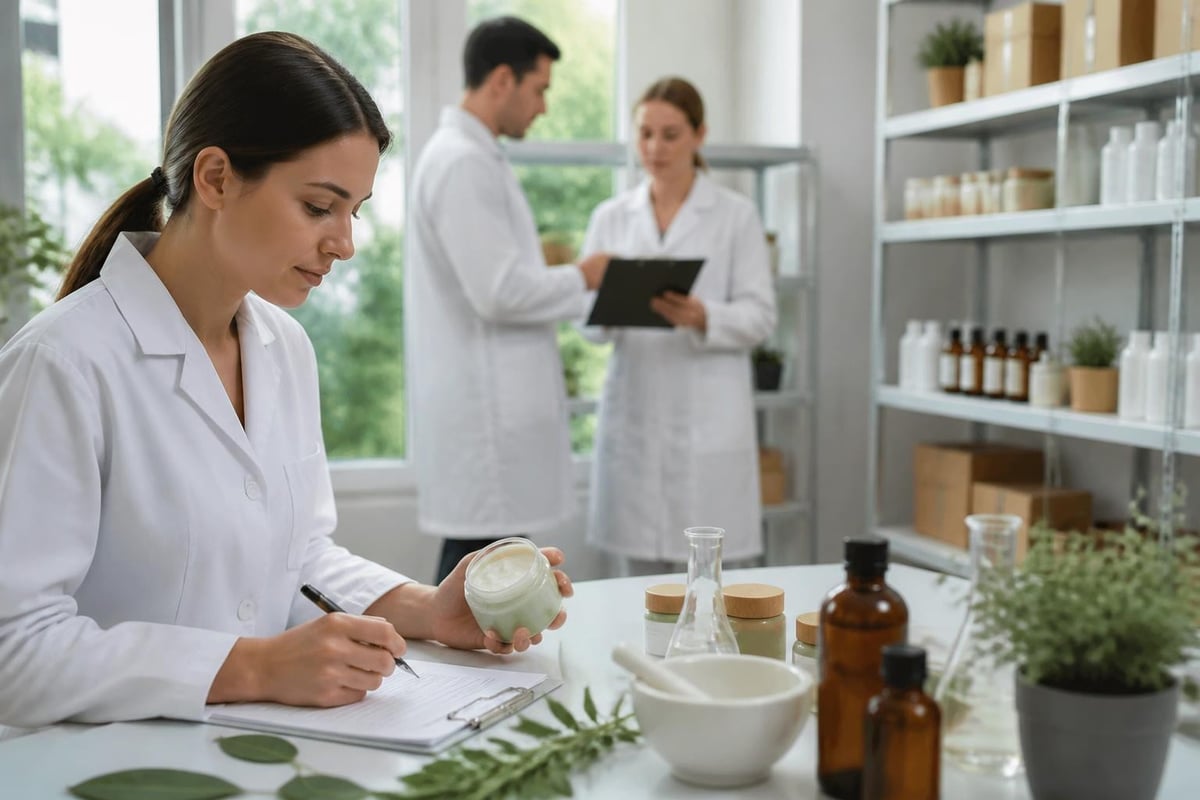
Organic face products derive their efficacy from botanicals, oils, and extracts cultivated using sustainable agricultural practices. These ingredients offer specific benefits supported by both traditional use and modern research.
Hydrating and Nourishing Components
| Ingredient | Primary Benefit | Skin Type Suitability |
|---|---|---|
| Organic Rosehip Oil | Vitamin A and essential fatty acids support cell turnover | All types, especially mature |
| Organic Jojoba Oil | Mimics skin's natural sebum, balances oil production | Combination to oily |
| Organic Shea Butter | Deep moisture retention and barrier support | Dry to normal |
| Organic Aloe Vera | Soothes inflammation and hydrates without heaviness | Sensitive and reactive |
Active Treatment Ingredients
Beyond moisturisation, organic face products incorporate plant-based actives that address specific skin concerns. Organic green tea extract provides antioxidant protection against environmental stressors. Organic willow bark contains natural salicylates that gently exfoliate and refine texture. Organic chamomile calms redness and supports healing processes.
The agricultural practices behind these ingredients matter significantly. The EPA's overview of organic farming demonstrates how soil health, biodiversity, and sustainable cultivation methods influence the nutrient density and bioavailability of botanical ingredients used in skincare formulations.
Benefits Beyond Chemical Avoidance
Many consumers initially choose organic face products to avoid synthetic preservatives, fragrances, or petroleum derivatives. While this represents one advantage, the benefits extend considerably further into skin function and long-term outcomes.
Bioavailability and Skin Recognition
Organic ingredients often demonstrate superior bioavailability compared to synthetic alternatives. Plant compounds developed through natural growth cycles contain complementary phytochemicals that work synergistically. Your skin's cellular mechanisms evolved alongside botanical compounds over millennia, potentially recognising and processing these ingredients more efficiently than laboratory-created molecules.
Nutrient density increases when plants grow in healthy, mineral-rich soil without chemical intervention. Organic cultivation practices prioritise soil ecology, producing ingredients with higher concentrations of vitamins, antioxidants, and beneficial compounds.
Environmental and Systemic Health
Choosing organic face products creates positive effects beyond individual skin health:
- Reduces chemical runoff into waterways from conventional agriculture
- Supports biodiversity by protecting pollinator populations
- Decreases exposure to endocrine-disrupting compounds
- Promotes sustainable farming practices globally
- Minimises residual pesticide absorption through facial skin
The facial skin contains high concentrations of blood vessels and sebaceous glands, creating potential pathways for ingredient absorption into systemic circulation. While topical application differs from ingestion, Medical News Today discusses the benefits and considerations of organic skin care, including absorption concerns and ingredient transparency.

Building a Structured Organic Skincare System
Individual organic face products deliver targeted benefits, but true skin transformation emerges from systematic application. Rather than accumulating random organic serums, cleansers, and moisturisers, effective skincare requires understanding how products function together within defined roles.
The Target-Boost-Maintain Framework
Modern skincare philosophy recognises three distinct product categories, each serving specific purposes:
Target: Precision treatments addressing exact concerns at specific locations. These products concentrate active ingredients where problems exist rather than applying them broadly across all facial skin.
Boost: Tools and formulations that enhance how skin responds to targeted treatments. These might include technologies that improve absorption, increase cellular activity, or support healing processes.
For example, The Routine. Wand combines red and blue light therapy with gentle vibration to support circulation and calm inflammation, helping skin respond more effectively to targeted organic treatments. This daily tool refines texture and promotes clearer, more balanced tone through consistent use.

Maintain: Supporting formulations that preserve improvements, balance moisture levels, and protect skin barrier integrity between targeted treatments.
Selecting Organic Products for Each Category
When building your organic skincare ecosystem, match product types to their functional roles:
- Organic cleansing oils or balms (Maintain): Remove impurities without stripping natural oils
- Organic treatment serums with specific actives (Target): Address pigmentation, texture, or firmness at problem areas
- Organic facial oils rich in antioxidants (Maintain): Lock in moisture and protect against environmental damage
- Organic exfoliating treatments (Target): Refine texture and promote cellular turnover at controlled intervals
This systematic approach prevents the common mistake of applying too many active ingredients simultaneously, which can compromise skin barrier function regardless of organic status.
Common Misconceptions About Organic Face Products
Despite growing popularity, several persistent myths surround organic skincare that deserve clarification.
Myth: Organic Means Preservative-Free
Reality: Organic face products require preservation to prevent microbial contamination. Certified organic formulations use plant-derived preservatives such as organic radish root ferment, organic rosemary extract, or organic neem oil rather than synthetic options like parabens or phenoxyethanol.
Myth: All Natural Ingredients Are Organic
Reality: Natural and organic represent distinct categories. Provenance provides a directory of products with natural or organic ingredients, validated against defined industry standards, highlighting the importance of certification over marketing claims.
Natural ingredients may come from plants but don't necessarily meet organic farming standards. A product containing botanical extracts from conventionally farmed plants qualifies as natural but not organic.
Myth: Organic Products Work Slower Than Synthetic Alternatives
Reality: Efficacy timelines depend on active ingredient concentration, delivery systems, and individual skin response, not organic status. Some organic compounds demonstrate rapid visible effects, whilst certain synthetic ingredients require extended use for results.
The difference lies in formulation strategy. Organic face products often prioritise skin barrier support and long-term function over immediate cosmetic effects. This approach builds sustainable improvements rather than temporary appearances.
Reading Labels and Verifying Claims
The organic beauty market contains genuinely certified products alongside those using "organic" as marketing language without substantiation. Developing label-reading skills protects your investment and ensures you receive authentic organic face products.
Certification Symbols and Placement
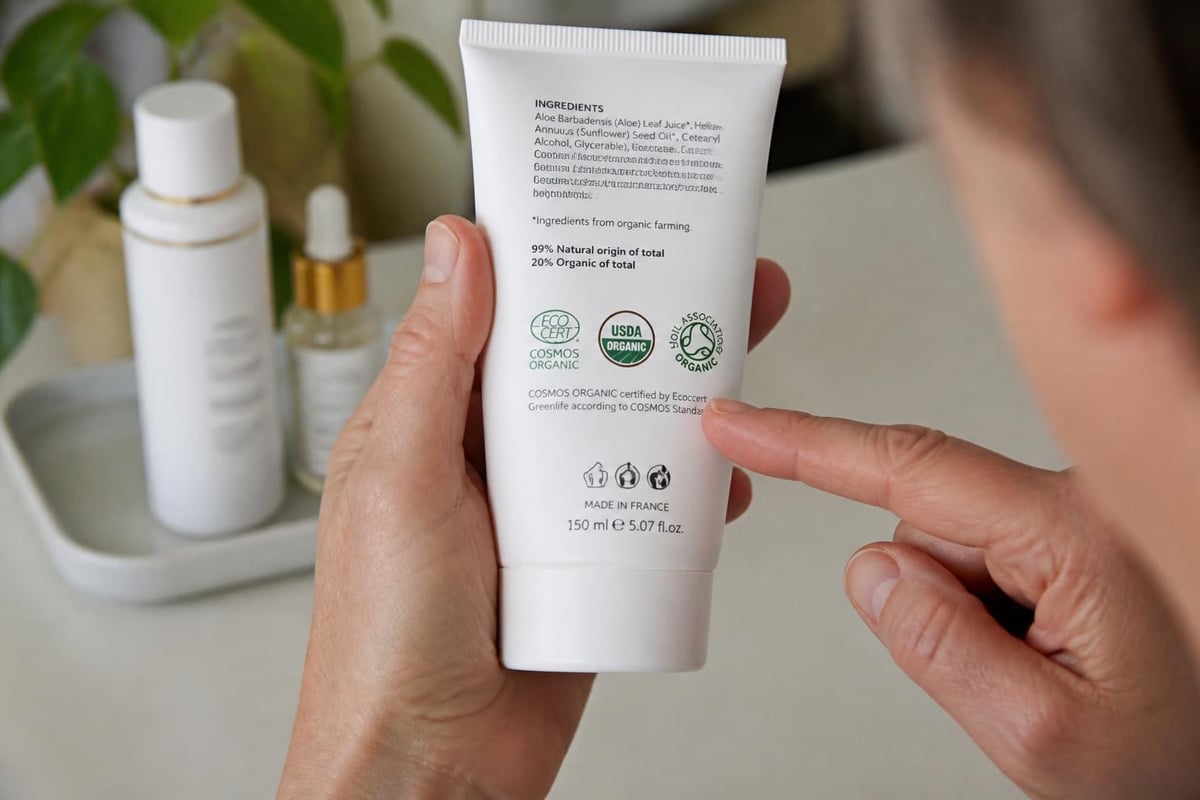
Legitimate organic face products display certification logos prominently on packaging. Look for:
- Certifying body name and logo (COSMOS, USDA, Soil Association, etc.)
- Certification number or licence code
- Percentage of organic content clearly stated
- Individual ingredient organic status in the INCI list
Ingredient lists follow concentration order, with highest quantities listed first. Certified organic ingredients often appear with an asterisk or designation like "(organic)" following the INCI name.
Percentage Requirements and Categories
| Product Category | Minimum Organic Content | Label Claim Allowed |
|---|---|---|
| 100% Organic | 100% certified organic ingredients | "100% Organic" |
| Organic | 95%+ certified organic ingredients | "Organic" |
| Made with Organic | 70%+ certified organic ingredients | "Made with Organic [ingredients]" |
| Contains Organic | Less than 70% organic ingredients | Cannot use certification seal |
Understanding these categories prevents confusion when comparing organic face products. A serum labelled "contains organic ingredients" differs substantially from one certified as "organic" by recognised bodies.
Formulation Challenges in Organic Skincare
Creating effective organic face products presents unique technical challenges that conventional formulations avoid through synthetic ingredients.
Stability and Shelf Life
Organic ingredients may oxidise faster than synthetic alternatives. Plant oils rich in beneficial fatty acids can become rancid without proper stabilisation. Organic formulators address this through:
- Antioxidant systems: Combining organic vitamin E, rosemary extract, and other natural preservatives
- Airless packaging: Preventing oxygen exposure that degrades sensitive compounds
- Smaller batch production: Ensuring fresher products with optimal potency
- Refrigeration recommendations: Extending stability for certain formulations
Texture and Sensory Experience
Synthetic emulsifiers, silicones, and texturisers create the smooth, lightweight textures many consumers expect. Organic face products achieve pleasant application properties through careful ingredient selection and processing techniques, though some formulations may feel heavier or require longer absorption times.
This represents a philosophical choice. Prioritising certified organic ingredients sometimes means accepting different sensory experiences in exchange for ingredient integrity and environmental responsibility.
Colour and Fragrance Variation
Synthetic skincare maintains consistent colour and scent across batches through artificial dyes and fragrances. Organic face products may vary slightly between production runs as natural ingredient characteristics fluctuate with growing seasons, harvest timing, and regional differences.
These variations don't indicate quality problems but rather authentic botanical sourcing. Some brands list batch numbers and harvest dates, providing transparency about ingredient origins.
Organic Face Products for Specific Skin Concerns
Different skin conditions respond to targeted organic formulations designed with specific mechanisms and ingredients.
Addressing Hyperpigmentation and Dark Spots
Organic face products targeting uneven tone often incorporate:
- Organic licorice root extract: Inhibits tyrosinase enzyme activity involved in melanin production
- Organic bearberry extract: Contains natural arbutin that brightens without harsh bleaching
- Organic vitamin C from kakadu plum or camu camu: Antioxidant protection with brightening effects
- Organic niacinamide from organic sources: Reduces melanin transfer to skin cells
These ingredients work gradually, supporting natural skin turnover cycles rather than forcing rapid changes that might compromise barrier function.
Managing Reactive and Sensitive Skin
Sensitive skin types benefit from organic formulations that minimise potential irritants:
- Certified organic ingredients reduce pesticide residue exposure
- Plant-based preservatives often prove gentler than synthetic options
- Organic certification prohibits many common irritants
- Simple, short ingredient lists decrease reaction probability
Key organic ingredients for sensitivity: organic calendula, organic oat extract, organic cucumber, organic marshmallow root.
Supporting Mature Skin Function
Age-related skin changes require ingredients that support cellular renewal, collagen synthesis, and moisture retention. Organic face products for mature skin typically feature:
| Concern | Organic Ingredient | Mechanism |
|---|---|---|
| Fine lines | Organic rosehip seed oil | Vitamin A supports cell turnover |
| Loss of firmness | Organic seabuckthorn | Omega-7 fatty acids improve elasticity |
| Dehydration | Organic hyaluronic acid | Attracts and retains moisture |
| Environmental damage | Organic green tea | Polyphenol antioxidants protect cells |
Integration with Professional Treatments
Organic face products complement professional skincare treatments when incorporated strategically into post-procedure routines.
Post-Treatment Recovery
After treatments like microneedling, chemical peels, or laser procedures, skin requires gentle, non-irritating formulations during healing. Organic face products often suit these recovery periods because:
- Minimal synthetic additives reduce complication risks
- Anti-inflammatory botanical compounds support healing
- Barrier-supporting oils protect compromised skin
- Gentle preservation systems avoid stinging or burning
Consult with your skincare professional about specific organic products appropriate for your post-treatment protocol. Some active organic ingredients may prove too stimulating during immediate recovery phases.
Maintenance Between Professional Sessions
Professional treatments create improvements that require ongoing support for sustained results. Organic face products serve maintenance roles between clinic visits, preserving treatment benefits through:
Daily barrier support: Organic moisturisers and oils maintain hydration and protection
Gentle ongoing exfoliation: Organic fruit enzymes or willow bark provide subtle refinement without aggression
Antioxidant protection: Organic botanical extracts defend against environmental damage that accelerates ageing
This integration creates a comprehensive approach where professional treatments provide intensive intervention whilst organic home care sustains and extends results.
Economic and Accessibility Considerations
Organic face products typically command higher prices than conventional alternatives due to several factors affecting production costs.
Cost Drivers in Organic Formulation
Understanding price differences helps set realistic expectations:
- Ingredient sourcing: Organic certification requires documented supply chains and often smaller-scale farming
- Yield variations: Organic farming may produce lower crop yields, increasing raw material costs
- Processing requirements: Organic ingredients need specialised facilities to prevent contamination
- Batch sizes: Smaller production runs increase per-unit costs
- Certification fees: Maintaining organic certification involves ongoing inspection and licensing expenses
Finding Value in Organic Skincare
Despite higher initial costs, organic face products may deliver economic value through:
- Concentrated formulations: Higher active ingredient levels mean using less product per application
- Multi-functional products: Single organic oils or serums often replace multiple conventional products
- Reduced skin reactions: Fewer irritation incidents decrease spending on corrective treatments
- Longevity of results: System-based approaches may reduce total product consumption over time
Consider cost per use rather than package price when evaluating organic face products. A premium organic serum lasting four months whilst delivering measurable improvements may prove more economical than frequent repurchasing of ineffective alternatives.
Future Directions in Organic Skincare
The organic beauty sector continues evolving as technology, agriculture, and consumer demands advance.
Emerging Ingredients and Cultivation Methods
Research into novel organic ingredients expands treatment possibilities:
- Biofermented organic compounds: Fermentation processes increase ingredient bioavailability and create new beneficial compounds
- Regenerative organic certification: Beyond avoiding harm, this emerging standard requires farming practices that actively improve soil health and sequester carbon
- Organic marine ingredients: Sustainably harvested seaweed and algae offer unique mineral profiles and protective compounds
- Native botanical preservation: Partnerships with indigenous communities bring traditional organic ingredients to modern formulations
Technology Integration
Organic face products increasingly incorporate delivery technologies previously limited to synthetic formulations:
Microencapsulation: Protecting sensitive organic actives and controlling release timing
Nano-emulsion: Creating lightweight textures from organic oils without synthetic silicones
Biotechnology: Producing organic-certified active ingredients through controlled fermentation rather than field cultivation
These innovations address formulation challenges whilst maintaining organic integrity, making effective organic face products more accessible and appealing.
Building Your Organic Skincare Routine
Transitioning to organic face products requires thoughtful planning rather than immediate replacement of every existing product.
Strategic Implementation Steps
Follow this structured approach for successful integration:
Week 1-2: Replace your cleanser with an organic option. This foundational step removes daily chemical exposure without overwhelming skin with multiple changes simultaneously.
Week 3-4: Introduce one organic treatment product targeting your primary concern. Monitor skin response and adjust application frequency as needed.
Week 5-6: Add organic moisturiser or facial oil to support barrier function and lock in treatment benefits.
Week 7-8: Evaluate results and consider additional targeted organic face products based on remaining concerns.
Patience and Adjustment Periods
Skin requires approximately 28 days to complete one full cellular turnover cycle. Expect this minimum timeframe before accurately assessing organic product performance. Some individuals experience brief adjustment periods as skin recalibrates from synthetic ingredients to botanical formulations.
Common temporary responses: slight dryness, minor breakouts, or texture changes typically resolve within 2-3 weeks as skin adapts.
Concerning reactions: persistent redness, burning, or worsening conditions indicate potential sensitivity rather than normal adjustment. Discontinue use and consult a dermatologist.
Quality Markers Beyond Organic Certification
While organic certification provides essential verification, additional quality indicators help identify exceptional organic face products.
Manufacturing and Sourcing Transparency
Premium organic brands typically offer:
- Detailed ingredient sourcing information, including farm locations and growing practices
- Third-party testing results for purity and active ingredient concentrations
- Clear explanation of preservation systems and stability testing
- Direct relationships with ingredient suppliers rather than intermediary procurement
Sustainable Packaging Practices
Authentic commitment to organic principles extends beyond formulation into packaging choices:
Preferred materials: Glass, aluminium, post-consumer recycled plastics, biodegradable components
Minimal packaging: Eliminating unnecessary outer boxes and excessive wrapping
Refill programmes: Allowing container reuse to reduce waste
Carbon-neutral shipping: Offsetting delivery emissions through verified environmental programmes
These practices indicate brands viewing organic certification as part of comprehensive environmental responsibility rather than isolated marketing positioning.
Choosing organic face products represents more than ingredient preference-it reflects a commitment to skin health built on transparency, sustainability, and long-term function. By understanding certification standards, reading labels critically, and building structured routines rather than collecting random products, you create skincare systems delivering measurable, lasting improvements. Routine. Beauty approaches this philosophy through a clear Target-Boost-Maintain ecosystem, where each product serves one defined role within a disciplined system designed for real life and genuine skin confidence.

