


The skincare industry has evolved significantly over the past decade, with men's grooming becoming a sophisticated market segment driven by innovation and scientific precision. Among the most notable advancements is particle face cream for men, a technology-driven approach that fundamentally changes how active ingredients are delivered to male skin. Unlike traditional creams that sit on the surface, particle-based formulations use microscopic delivery systems to transport beneficial compounds deeper into the skin layers, where they can create meaningful, visible change. This approach addresses the unique challenges of men's skin, which tends to be thicker, oilier, and more prone to environmental damage than women's skin.
Understanding Particle Technology in Men's Skincare
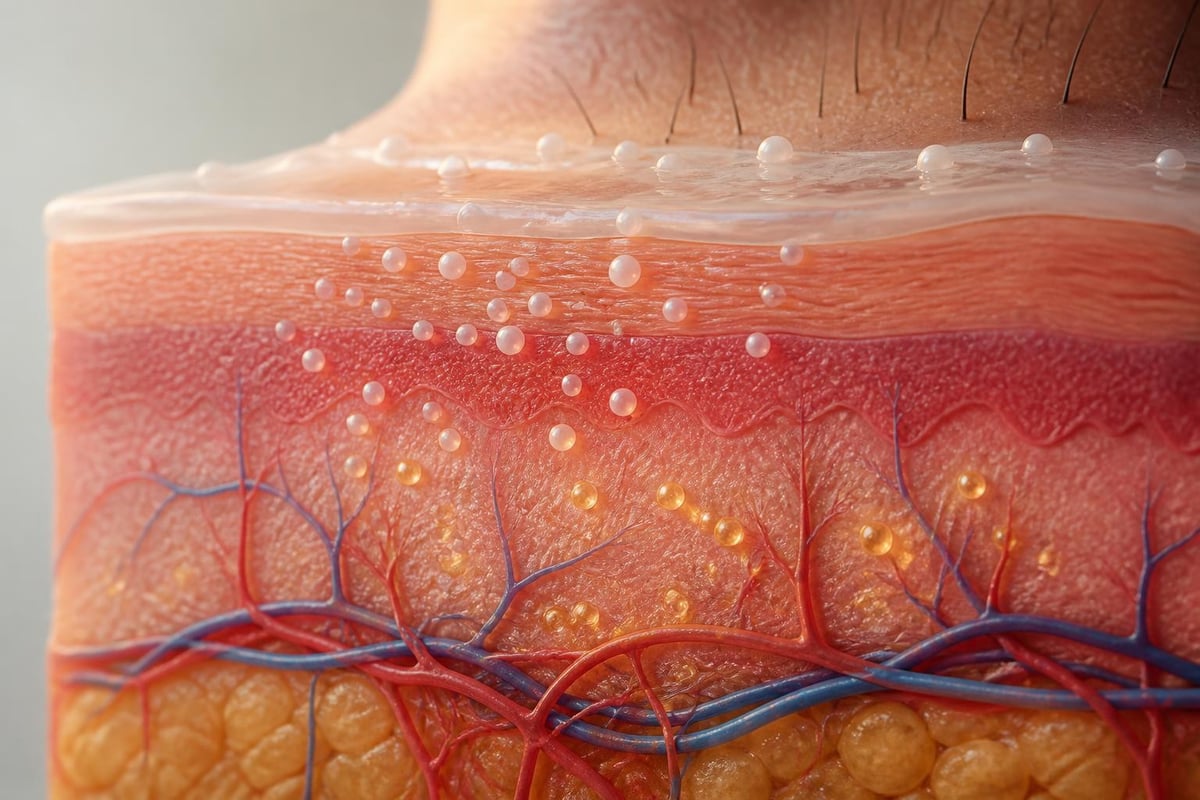
Particle face cream for men represents a shift from surface-level moisturisation to targeted delivery systems. The term "particle" refers to microscopic encapsulated ingredients that protect active compounds during application and release them at specific depths within the skin tissue.
The Science Behind Encapsulation
Modern particle technology relies on several encapsulation methods:
- Liposomes: Spherical vesicles that mimic cell membranes, allowing seamless penetration
- Niosomes: Non-ionic surfactant-based carriers that enhance stability
- Solid lipid nanoparticles: Crystalline structures that control release rates
- Polymeric nanoparticles: Biodegradable carriers for sustained delivery
These microscopic structures typically measure between 10 and 500 nanometers in diameter. Their small size enables them to navigate through the stratum corneum, the skin's outermost protective barrier, which would otherwise block larger molecules from reaching viable tissue.
The efficacy of various anti-aging treatments has been extensively studied, revealing that delivery mechanism matters as much as ingredient quality. Particle-based systems demonstrate superior bioavailability compared to conventional formulations, meaning more of the active ingredient reaches its intended target.
Why Men's Skin Requires Specialized Formulation
Male skin differs structurally and functionally from female skin in several measurable ways:
| Characteristic | Men's Skin | Impact on Formulation |
|---|---|---|
| Thickness | Approximately 25% thicker | Requires deeper penetration systems |
| Collagen Density | Higher baseline density | Needs targeted anti-aging approach |
| Sebum Production | Double the output | Demands oil-control ingredients |
| Water Loss | Faster transepidermal loss | Benefits from encapsulated hydrators |
These differences explain why particle face cream for men isn't simply repackaged women's skincare. The formulation must account for thicker dermal structure, higher sebum production, and different aging patterns. Men's facial skin also experiences more frequent trauma from shaving, creating micro-abrasions that affect absorption patterns.
Key Ingredients in Particle Face Cream Formulations
The effectiveness of particle face cream for men depends largely on which active ingredients are encapsulated and delivered through the particle system. Modern formulations combine traditional skincare compounds with cutting-edge delivery mechanisms.
Peptides and Growth Factors
Peptides are short chains of amino acids that signal skin cells to perform specific functions, such as collagen production or inflammation reduction. When encapsulated in particles, these fragile molecules remain stable until they reach deeper skin layers.
Common peptides in men's particle creams include:
- Palmitoyl pentapeptide (Matrixyl): Stimulates collagen synthesis
- Copper peptides: Support wound healing and skin renewal
- Hexapeptides: Reduce expression lines through controlled muscle relaxation
Growth factors, naturally occurring proteins that regulate cell behavior, work synergistically with peptides when delivered through particle systems. These compounds are particularly unstable in conventional formulations but maintain activity when protected by liposomal or nanoparticle carriers.
Antioxidants and Protective Compounds
The role of antioxidants in skin health extends beyond basic protection. In particle formulations, antioxidants create a multi-layered defense system against environmental damage.
Vitamin C (ascorbic acid) is notoriously unstable in water-based creams, degrading within weeks of formulation. Particle encapsulation solves this problem by creating an oxygen-free environment around each vitamin C molecule until application. This ensures maximum potency when the compound reaches the skin.
Vitamin E serves dual purposes in particle face cream for men. Research on vitamin E in skin health demonstrates its effectiveness as both an antioxidant and a moisturizing agent. When combined with vitamin C in particle systems, the two create a synergistic effect that exceeds either ingredient alone.
Resveratrol, derived from grapes and berries, provides powerful anti-inflammatory benefits. Particle delivery protects this sensitive polyphenol from degradation while enhancing its absorption into deeper tissue layers.
Hydration and Barrier Support
Hyaluronic acid remains the gold standard for skin hydration, capable of holding up to 1,000 times its weight in water. Studies examining hyaluronic acid's effects on skin hydration confirm its ability to improve moisture retention and elasticity.
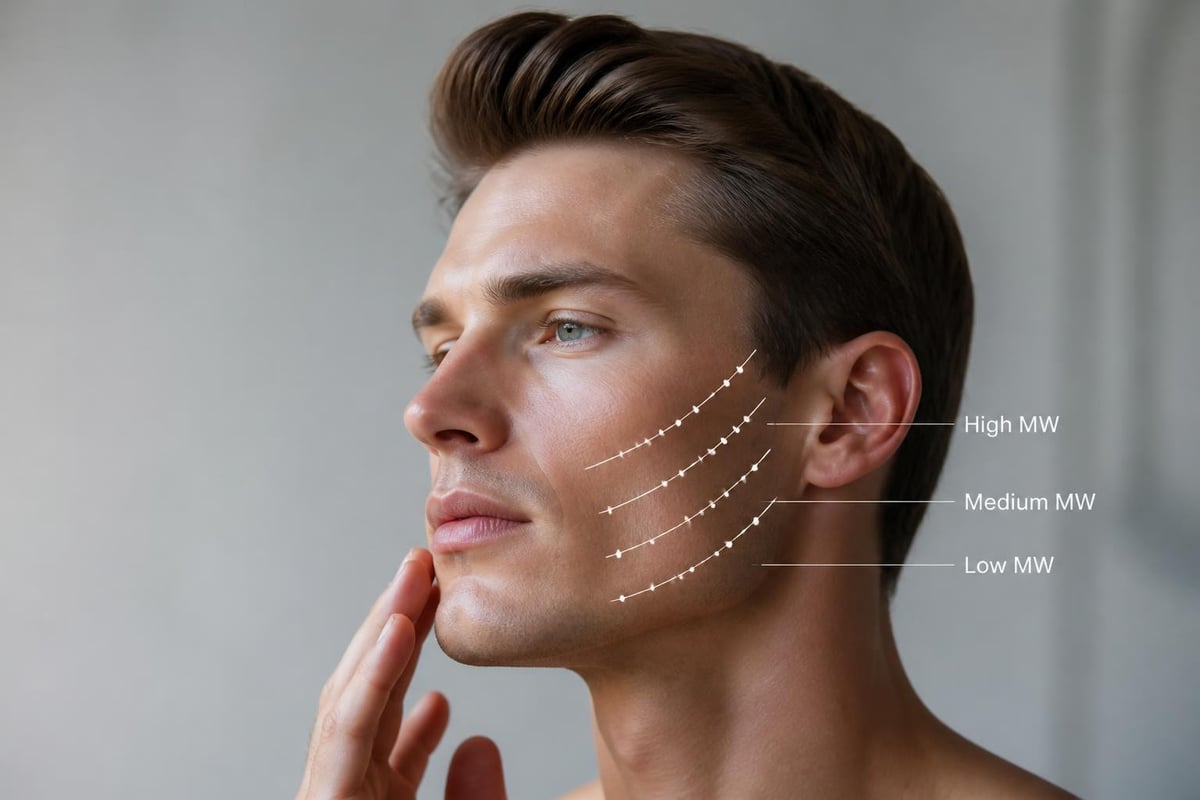
In particle face cream for men, hyaluronic acid is often formulated in multiple molecular weights:
- High molecular weight: Stays on skin surface, creating immediate plumping
- Medium molecular weight: Penetrates upper epidermis for sustained hydration
- Low molecular weight: Reaches deeper layers when particle-encapsulated
Ceramides, lipid molecules that make up 50% of the skin's natural barrier, work alongside hyaluronic acid to prevent moisture loss. Particle delivery ensures these waxy compounds reach the intercellular spaces where they're most effective.
Application Techniques for Maximum Effectiveness
Purchasing particle face cream for men represents only half the equation. Proper application technique determines how effectively the particle system delivers its payload.
Pre-Application Skin Preparation
Clean skin absorbs particle formulations more efficiently than skin laden with sebum, dead cells, or environmental debris. The preparation sequence matters:
- Cleanse with a pH-balanced, non-stripping cleanser
- Optional: Use a gentle chemical exfoliant (AHA or BHA) 2-3 times weekly
- Pat skin until slightly damp, not completely dry
- Apply particle cream within 60 seconds of cleansing
The "slightly damp" state is crucial. Water on the skin surface can help certain particle types penetrate more effectively while preventing the cream from sitting on top of completely dry skin.
Application Method and Quantity
Less is genuinely more with particle face cream for men. Because these formulations deliver ingredients more efficiently, they require smaller amounts than conventional creams.
Proper application technique:
- Dispense a pea-sized amount for entire face
- Warm between fingertips for 3-5 seconds
- Apply using upward, outward motions
- Use gentle pressure, not rubbing or tugging
- Allow 2-3 minutes for absorption before additional products
The warming step activates certain particle systems, particularly those using solid lipid technology that responds to body temperature. Vigorous rubbing can actually damage some particle structures, reducing their effectiveness.
Layering with Other Products
Particle face cream for men works best within a structured routine that respects product chemistry and absorption timing.
| Step | Product Type | Wait Time | Purpose |
|---|---|---|---|
| 1 | Cleanser | Rinse thoroughly | Remove barriers |
| 2 | Treatment serum | 60 seconds | Target specific concerns |
| 3 | Particle cream | 2-3 minutes | Deliver encapsulated actives |
| 4 | SPF (morning only) | None | Protect from UV damage |
This sequence ensures each product type reaches its intended target without interference. Water-based serums should always precede particle creams, which tend to have emollient bases that could block serum absorption.
Choosing the Right Particle Cream for Your Skin Type
Not all particle face cream for men formulations address the same concerns. Selecting the right product requires understanding your skin's specific characteristics and challenges.
Oily and Combination Skin Considerations
Men with oily or combination skin often avoid moisturizers, fearing they'll exacerbate shine or trigger breakouts. Particle technology solves this problem through targeted delivery that doesn't overload the skin surface.
Key features to seek:
- Gel-cream or serum-cream hybrid textures
- Niacinamide particles for sebum regulation
- Mattifying minerals like silica
- Non-comedogenic certification
- Oil-free base formulations
Look for particle systems that deliver hydration to deeper layers while keeping the surface matte. Niosomes and polymeric particles excel at this selective delivery, providing internal moisture without surface greasiness.
Dry and Sensitive Skin Requirements
Dry skin benefits enormously from particle face cream for men because the technology can deliver multiple molecular weights of hydrating ingredients simultaneously. Sensitive skin requires particle formulations free from common irritants.
Optimal ingredient profile:
- Liposomal ceramides and cholesterol
- Particle-encapsulated squalane or jojoba oil
- Fragrance-free formulation
- Minimal preservative system
- Anti-inflammatory botanicals (chamomile, green tea)
The benefits of jojoba oil in skincare include its similarity to human sebum, making it exceptionally compatible with all skin types. When delivered through particle systems, jojoba oil penetrates without heaviness.
For men dealing with sensitivity, Routine Beauty's approach to systematic skincare becomes particularly relevant. Refresh My Cheeks offers a lightweight, hydrating serum that replenishes and soothes skin after targeted treatments, supporting moisture balance and helping maintain calmer, more even-looking skin.

Aging and Sun-Damaged Skin Solutions
Men typically begin addressing visible aging later than women, often waiting until lines, spots, and texture changes become pronounced. Particle face cream for men formulated for aging skin concentrates on repair and prevention.
Critical active ingredients:
- Retinol in time-release particle systems
- Peptide complexes for collagen support
- Antioxidant cocktails (vitamins C and E)
- Growth factors in stabilized carriers
- DNA repair enzymes
Particle encapsulation allows retinol to work effectively with minimal irritation. Traditional retinol formulations can cause significant dryness and flaking, particularly on male skin unaccustomed to active ingredients. Particle delivery moderates the release rate, reducing side effects while maintaining efficacy.
Common Misconceptions About Particle Technology
Despite growing popularity, particle face cream for men remains subject to myths and misunderstandings that prevent some men from experiencing its benefits.
"Nanoparticles Are Dangerous"
Safety concerns about nanoparticles in skincare stem from confusion about different particle types. The nanoparticles used in sunscreens (zinc oxide and titanium dioxide) differ fundamentally from those in particle creams.
Reality check:
- Skincare particles are typically biodegradable lipids or polymers
- They remain in upper skin layers and don't enter bloodstream
- Extensive safety testing precedes commercial release
- Particle sizes prevent systemic absorption
Regulatory bodies worldwide, including Australia's Therapeutic Goods Administration, have established guidelines for nanoparticle use in cosmetics. Approved particle face cream for men formulations meet strict safety criteria based on particle type, size, and concentration.
"More Expensive Means Better Quality"
Price doesn't always correlate with particle technology effectiveness. Some affordable brands use sophisticated delivery systems, while luxury products sometimes rely on elegant packaging rather than advanced formulation.
What actually matters:
- Specific particle type used for encapsulation
- Concentration of active ingredients
- Clinical testing and published results
- Ingredient stability and shelf life
- Brand transparency about formulation methods
Rather than focusing solely on price, examine ingredient lists for specific particle technology terms: liposomal, encapsulated, microencapsulated, or nanoencapsulated. These indicators suggest genuine particle delivery systems rather than marketing language.
"Results Should Be Immediate"
Particle face cream for men works at a cellular level, triggering biological processes that require time to manifest visible changes. This contrasts with superficial treatments that create temporary optical effects.
Realistic timeline expectations:
| Timeframe | Expected Changes | Biological Process |
|---|---|---|
| 1-2 weeks | Improved hydration, texture smoothing | Enhanced moisture retention |
| 4-6 weeks | Reduced fine lines, better tone | Increased cell turnover |
| 8-12 weeks | Firmer appearance, faded spots | Collagen synthesis, melanin regulation |
| 3-6 months | Structural improvements, refined texture | Cumulative cellular repair |
Understanding this timeline prevents premature product abandonment. The most effective particle formulations create progressive improvement rather than dramatic overnight transformation.
Integration with Comprehensive Skincare Systems
Particle face cream for men delivers optimal results when integrated into a complete, structured approach rather than used in isolation. This system-based thinking aligns perfectly with modern skincare philosophy.
The Target-Boost-Maintain Framework
Contemporary skincare recognizes that different products serve distinct purposes within an ecosystem:
Target: Address specific concerns with precision treatments Boost: Enhance cellular function with technology-driven delivery Maintain: Protect and sustain improvements with consistent care
Particle face cream for men typically occupies the "Boost" position, delivering concentrated actives that enhance the skin's response to targeted treatments. This middle position maximizes the cream's effectiveness because targeted treatments have prepared the skin for better absorption.
Complementary Technologies
Particle delivery works synergistically with other skincare technologies:
- Microneedling: Creates temporary channels that enhance particle penetration
- Light therapy: Stimulates cellular processes that particle-delivered ingredients support
- Chemical exfoliants: Remove barriers that might impede particle movement
- Facial massage: Improves circulation, helping distribute particle-delivered nutrients
When combining technologies, timing matters. Allow 24-48 hours between aggressive treatments (like professional microneedling) and particle cream application to prevent over-stimulation.
Seasonal Adjustments
Men's skin experiences seasonal variations that affect how particle face cream performs. Winter's dry air and indoor heating increase water loss, while summer's heat and UV exposure create different challenges.
Winter optimization:
- Layer particle cream over hydrating serum
- Choose formulations with higher ceramide content
- Apply slightly more product than summer months
- Consider twice-daily application for very dry conditions
Summer adaptation:
- Select lighter particle gel-cream textures
- Prioritize antioxidant-loaded particles for UV defense
- Ensure SPF application over particle cream
- May reduce to once-daily application if skin feels saturated
The Future of Particle Technology in Men's Grooming
Innovation in particle face cream for men continues accelerating as research reveals new possibilities for targeted delivery and enhanced efficacy.
Emerging Particle Systems
Next-generation technologies currently in development include:
- Stimuli-responsive particles: Release actives only when triggered by specific conditions (pH changes, temperature, or inflammation markers)
- Multi-compartment particles: Deliver sequential releases of different ingredients
- Bio-mimetic particles: Mimic natural skin structures for seamless integration
- Smart particles: Respond to individual skin needs in real-time
These advances promise even greater precision, allowing particle face cream for men to deliver exactly the right ingredients at exactly the right moment.
Personalization and Custom Formulation
Technology now enables particle creams tailored to individual genetic profiles, environmental exposures, and lifestyle factors. Some brands offer:
- DNA testing to identify skin predispositions
- Environmental sensors that track pollution and UV exposure
- AI analysis of skin photos to detect subtle changes
- Custom particle formulations based on collected data
This personalization ensures that particle face cream for men addresses each individual's unique needs rather than taking a one-size-fits-all approach.
Sustainability in Particle Production
Environmental consciousness shapes particle technology development. Modern innovations focus on:
- Biodegradable particle materials derived from renewable sources
- Waterless formulations that reduce environmental impact
- Refillable packaging systems for particle creams
- Clean production methods with minimal waste
These sustainable practices ensure that advanced skincare doesn't come at environmental expense, aligning with values increasingly important to male consumers.

Addressing Specific Skin Concerns with Targeted Particles
Different skin challenges require different particle approaches. Understanding which particle systems address specific concerns helps men select the most appropriate particle face cream.
Hyperpigmentation and Uneven Tone
Dark spots, sun damage, and uneven skin tone respond well to particle delivery of specific brightening agents. The controlled release prevents irritation while maintaining ingredient potency.
Effective particle-delivered ingredients for tone correction:
- Tranexamic acid in liposomal particles
- Stabilized vitamin C derivatives
- Niacinamide in sustained-release systems
- Kojic acid in protective encapsulation
- Alpha arbutin with targeted delivery
Research on caffeine's impact on skin physiology demonstrates benefits beyond dark circles, including improved microcirculation that supports even tone. When combined with brightening agents in particle systems, caffeine enhances overall radiance.
Fine Lines and Loss of Firmness
Aging-related concerns require particle face cream for men that delivers both immediate hydration and long-term structural support. Multi-functional particles excel at this dual approach.
Retinol remains the most researched anti-aging ingredient, but traditional formulations often irritate male skin unaccustomed to active ingredients. Particle encapsulation solves this through:
- Gradual time-released delivery
- Protection from oxidation and degradation
- Reduced surface irritation
- Enhanced penetration to target depths
Combining retinol particles with peptide-loaded carriers creates comprehensive anti-aging benefits, addressing both collagen breakdown and reduced cellular renewal.
Inflammation and Redness
Men with reactive skin, rosacea, or post-shaving irritation benefit from anti-inflammatory particle face cream formulations. These systems deliver soothing compounds precisely where inflammation occurs.
Calming ingredients optimized through particle delivery:
- Centella asiatica (cica) extract
- Azelaic acid in buffered systems
- Niacinamide for barrier repair
- Bisabolol and allantoin
- Green tea polyphenols
The particle system prevents these sensitive ingredients from degrading before reaching inflamed tissue, ensuring maximum therapeutic benefit.
Acne and Congestion
Adult male acne requires different treatment than teenage breakouts. Particle face cream for men addressing acne combines antibacterial, anti-inflammatory, and sebum-regulating ingredients in targeted delivery systems.
Acne-fighting particle formulations include:
- Salicylic acid in slow-release particles (reduces irritation)
- Zinc oxide nanoparticles (antibacterial without antibiotic resistance)
- Retinol particles (normalize cell turnover in pores)
- Niacinamide systems (regulate oil production)
These particles deliver active ingredients into follicles where acne begins, rather than just treating surface symptoms.
Professional vs. Over-the-Counter Particle Formulations
The particle face cream for men market spans from pharmacy shelves to dermatologist offices, with significant differences in formulation strength and technology sophistication.
Clinical-Grade Particle Systems
Professional-grade products typically feature:
- Higher concentrations of active ingredients
- More sophisticated particle engineering
- Pharmaceutical-grade manufacturing standards
- Clinical trial data supporting efficacy claims
- Often requiring professional consultation
These formulations may cost significantly more but deliver measurably stronger results for serious skin concerns. Dermatologists can also combine particle creams with in-office treatments for synergistic benefits.
Accessible Commercial Options
Over-the-counter particle face cream for men offers several advantages:
- Immediate availability without appointments
- Lower price points for trial and error
- Gentler formulations suitable for sensitive skin
- Broader selection of textures and scent profiles
- Integration with existing routines without disruption
Quality commercial products use proven particle technologies at concentrations appropriate for unsupervised home use. While results may develop more gradually than clinical formulations, they still deliver meaningful improvement.
Hybrid Approaches
Many men achieve optimal results by combining professional and commercial products:
| Concern | Professional Product | Home Maintenance | Frequency |
|---|---|---|---|
| Deep lines | Prescription retinol particles | OTC peptide particle cream | Professional: 3x/week, OTC: daily |
| Stubborn spots | Clinical brightening system | OTC vitamin C particles | Professional: 2x/week, OTC: daily |
| Severe dryness | Medical-grade barrier repair | OTC hydrating particle cream | Professional: as needed, OTC: twice daily |
This strategy addresses serious concerns with professional strength while maintaining daily improvement with accessible products.
Understanding Ingredient Interactions in Particle Systems
Particle face cream for men often contains multiple encapsulated ingredients. Understanding how these compounds interact ensures safe, effective use.
Synergistic Combinations
Certain ingredient pairings enhance each other's effectiveness when delivered together in particle systems:
- Vitamin C + Vitamin E: Antioxidant power multiplies when combined
- Retinol + Peptides: Collagen breakdown slows while synthesis accelerates
- Niacinamide + Hyaluronic acid: Barrier function improves alongside hydration
- Ceramides + Cholesterol + Fatty acids: Mimics natural barrier composition
Advanced particle creams often use multi-compartment systems to keep certain ingredients separated until skin application, preventing premature interactions.
Potentially Problematic Pairings
Some ingredients should not be combined in the same application, even in particle systems:
Avoid simultaneous use of:
- Retinol and vitamin C (pH conflict, though some particle systems solve this)
- Retinol and AHA/BHA exfoliants (over-exfoliation risk)
- Multiple strong actives at full concentration (irritation potential)
When using particle face cream for men containing strong actives, introduce gradually and monitor skin response. Start with every-other-day application, increasing frequency as tolerance develops.
pH Considerations
Particle technology can buffer pH-sensitive ingredients, but some awareness remains important:
- Vitamin C works best at pH 3.5 or lower
- Retinol prefers pH 5.5-6.0
- Niacinamide functions well at pH 5.0-7.0
- AHAs require pH 3.0-4.0 for effectiveness
Quality particle face cream formulations engineer around these requirements, but when layering multiple products, pH incompatibility can reduce effectiveness.
Evaluating Marketing Claims vs. Scientific Reality
The particle face cream for men market includes both scientifically-backed products and those relying more on marketing than genuine innovation. Developing critical evaluation skills protects consumers from ineffective purchases.
Red Flags in Product Marketing
Suspect claims to question:
- "Instant age reversal" or "Miracle transformation"
- Proprietary ingredients with no published research
- Before/after photos without methodology disclosure
- Claims contradicting dermatological consensus
- Absence of ingredient concentration information
Legitimate particle technology brands provide transparent information about particle type, active ingredient concentrations, and realistic timelines for visible results.
Evidence-Based Evaluation Criteria
When assessing particle face cream for men, look for:
- Published clinical studies: Independent research, not just brand-funded testimonials
- Specific particle identification: Named technology (liposomal, niosomal, etc.)
- Active ingredient percentages: Effective concentrations clearly stated
- Realistic benefit claims: Improvement, not transformation language
- Professional endorsements: Dermatologist or scientific advisory boards
Products meeting these criteria more likely deliver on promises than those relying solely on aspirational marketing.
Understanding "Clinical Testing" Language
Many products claim "clinically tested" or "clinically proven" status. Understanding what this actually means prevents misinterpretation:
- Number of subjects: Studies with fewer than 30 participants have limited statistical power
- Study duration: Shorter than 8 weeks may show only temporary effects
- Control groups: Legitimate studies compare product to placebo or existing treatment
- Blinding: Best studies keep participants unaware of which product they receive
- Publication: Results published in peer-reviewed journals carry more weight
Particle face cream for men backed by robust clinical evidence demonstrates genuine commitment to efficacy over marketing hype.
Particle face cream for men represents a significant advancement in targeted skincare delivery, offering solutions that address the unique characteristics of male skin through scientifically-engineered systems. By understanding particle technology, ingredient selection, and proper application techniques, men can make informed decisions that lead to genuine, lasting skin improvement. Routine. Beauty takes this systematic approach further, building complete skincare ecosystems where each product has one defined role and works together as part of a disciplined routine-eliminating guesswork and creating long-term skin confidence through structure and simplicity.

