


Korean skin care products have transformed global beauty standards through their commitment to innovation, ingredient integrity, and results-driven formulations. The K-beauty phenomenon continues to reshape how consumers approach their daily routines, prioritising skin health over quick fixes and promoting a structured, methodical approach to long-term confidence. In 2026, these products represent more than cosmetic trends. They embody a philosophy that values prevention, precision, and patience, challenging conventional Western approaches that often focus on reactive solutions rather than proactive care.
Understanding the Korean Skincare Philosophy
The foundation of Korean skin care products rests on a fundamentally different approach to beauty. Rather than treating skincare as a series of isolated steps, Korean brands view the routine as an integrated system where each product fulfils a specific, non-negotiable role. This methodology emphasises barrier protection, hydration layering, and targeted intervention rather than aggressive treatments that strip or overwhelm the skin.
Korean formulations typically prioritise gentle yet effective ingredients that work cumulatively over time. This contrasts sharply with Western skincare's historical preference for high-concentration actives that promise immediate visible changes. The Korean approach acknowledges that skin health develops through consistent, measured application of complementary formulations.
The Evolution of K-Beauty Standards
Korean beauty brands have evolved significantly since their international expansion began in the early 2010s. What started as curiosity about elaborate multi-step routines has matured into sophisticated product ecosystems. Modern Korean skin care products now incorporate cutting-edge delivery systems, biotechnology-derived ingredients, and clinical testing protocols that rival pharmaceutical standards.
The industry's maturation has also brought greater transparency. Brands now publish detailed ingredient lists, clinical study results, and application protocols that empower consumers to make informed decisions. This shift toward education-based marketing reflects Korean beauty's commitment to long-term customer relationships built on trust and efficacy rather than trend cycles.
Key Categories Within Korean Skin Care Products
Korean skin care products span numerous categories, each designed to address specific skin needs within a broader routine structure. Understanding these categories helps consumers build coherent systems rather than accumulating disconnected products.
Cleansing and Preparation
Double cleansing remains a cornerstone of Korean skincare philosophy. This method uses an oil-based cleanser first to dissolve makeup and sebum, followed by a water-based cleanser to remove remaining impurities. The approach ensures thorough cleansing without disrupting the skin barrier through harsh scrubbing or stripping formulations.
First cleansers include:
- Cleansing oils with emulsifying properties
- Cleansing balms that transform from solid to oil
- Micellar waters for sensitive skin types
- Cleansing sherberts with botanical extracts
Second cleansers typically feature:
- Low-pH gel cleansers that maintain barrier integrity
- Creamy formulations with ceramides and amino acids
- Foam cleansers with controlled surfactant levels
- Powder cleansers activated with water for customised concentration
Treatment and Targeting
This category represents Korean skincare's most innovative contributions. Targeted Korean skincare products deliver specific actives to address particular concerns without overwhelming the entire face with unnecessary ingredients.
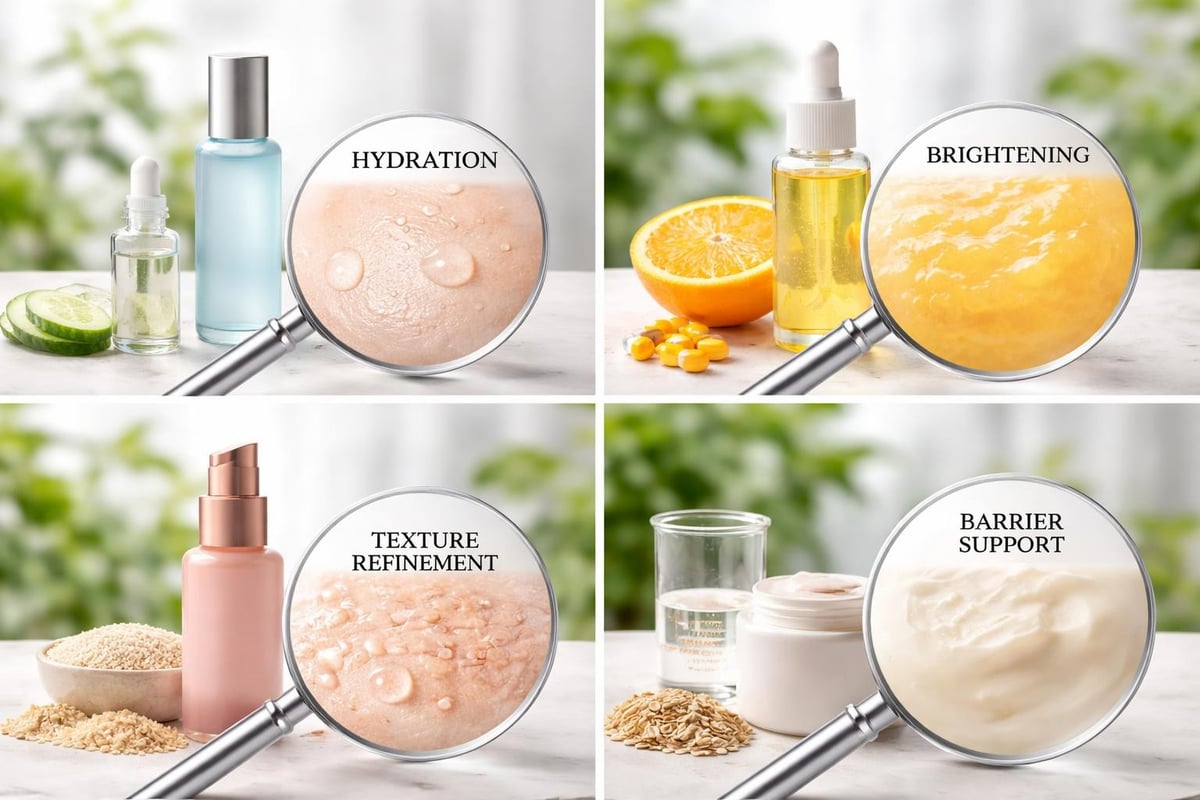
Treatment products include essences, serums, ampoules, and spot treatments. Each serves a distinct function within the routine hierarchy. Essences provide lightweight hydration and prepare skin for subsequent products. Serums deliver concentrated actives for specific concerns. Ampoules offer even higher concentrations for intensive treatment periods. Spot treatments address localised issues without affecting surrounding areas.
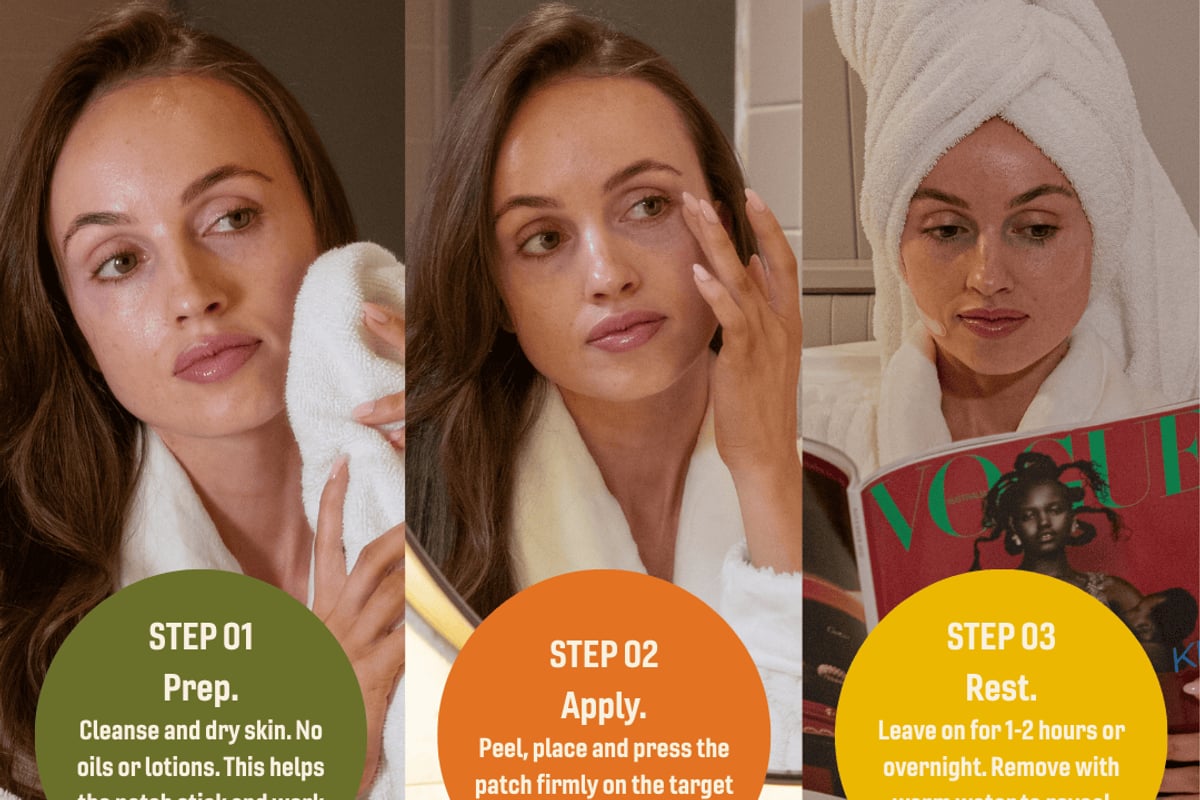
For those seeking precise intervention, modern innovations like targeted delivery patches have revolutionised how actives reach deeper skin layers. The Routine. Peptide MicroPatch exemplifies this evolution, using dissolving micro-tips to deliver brightening and smoothing actives directly into dark spots, marks, or textured zones where traditional topical application might not penetrate effectively.
Hydration and Maintenance
Korean skin care products place exceptional emphasis on maintaining optimal hydration levels through multiple product types. This category includes toners, essences, lotions, and creams, each offering different molecular weights and delivery mechanisms.
| Product Type | Primary Function | Texture Profile | Ideal For |
|---|---|---|---|
| Toner | pH balancing, initial hydration | Watery, fast-absorbing | All skin types |
| Essence | Deep hydration, active delivery | Lightweight viscous | Normal to dry skin |
| Lotion | Moisture sealing, barrier support | Light emulsion | Combination to oily skin |
| Cream | Occlusion, intensive nourishment | Rich, substantial | Dry to mature skin |
The layering principle allows users to customise hydration intensity based on seasonal changes, environmental conditions, and individual skin responses. This flexibility prevents the one-size-fits-all approach that often leads to product abandonment.
Ingredient Innovation in Korean Formulations
Korean skin care products distinguish themselves through ingredient selection and combination. While Western brands often focus on single-hero ingredients, Korean formulations typically blend multiple complementary actives to achieve synergistic effects.
Traditional Ingredients with Modern Applications
Korean beauty has successfully modernised traditional Asian ingredients through contemporary extraction and stabilisation methods. Ingredients like ginseng, green tea, rice extract, and artemisia now appear in formulations that deliver their benefits more effectively than historical preparations ever could.
Fermented ingredients represent another area where Korean brands excel. Fermentation breaks down molecules into smaller, more bioavailable forms that penetrate skin barriers more effectively. Galactomyces, bifida ferment lysate, and fermented rice water have become staple ingredients across multiple product categories.
Cutting-Edge Synthetic and Biotech Ingredients
Modern Korean skin care products increasingly incorporate biotechnology-derived ingredients that offer unprecedented precision. Peptides designed for specific cellular signalling, synthetic ceramides that perfectly match skin lipid profiles, and lab-grown botanical extracts provide consistent quality and potency that natural harvesting cannot guarantee.
Notable biotech innovations include:
- Encapsulated retinol for controlled release and reduced irritation
- Synthetic squalane from sustainable sources
- Biomimetic peptides that replicate growth factors
- Stabilised vitamin C derivatives with enhanced penetration
Research into Korean skincare formulations demonstrates how these ingredients work at cellular levels to support natural skin functions rather than overwhelming them with synthetic substitutes.
Building an Effective Korean Skincare Routine
Implementing Korean skin care products effectively requires understanding routine architecture. The famous 10-step routine represents a maximum framework rather than a mandatory prescription. Most users benefit from simplified versions that maintain the systematic approach without excessive product layering.
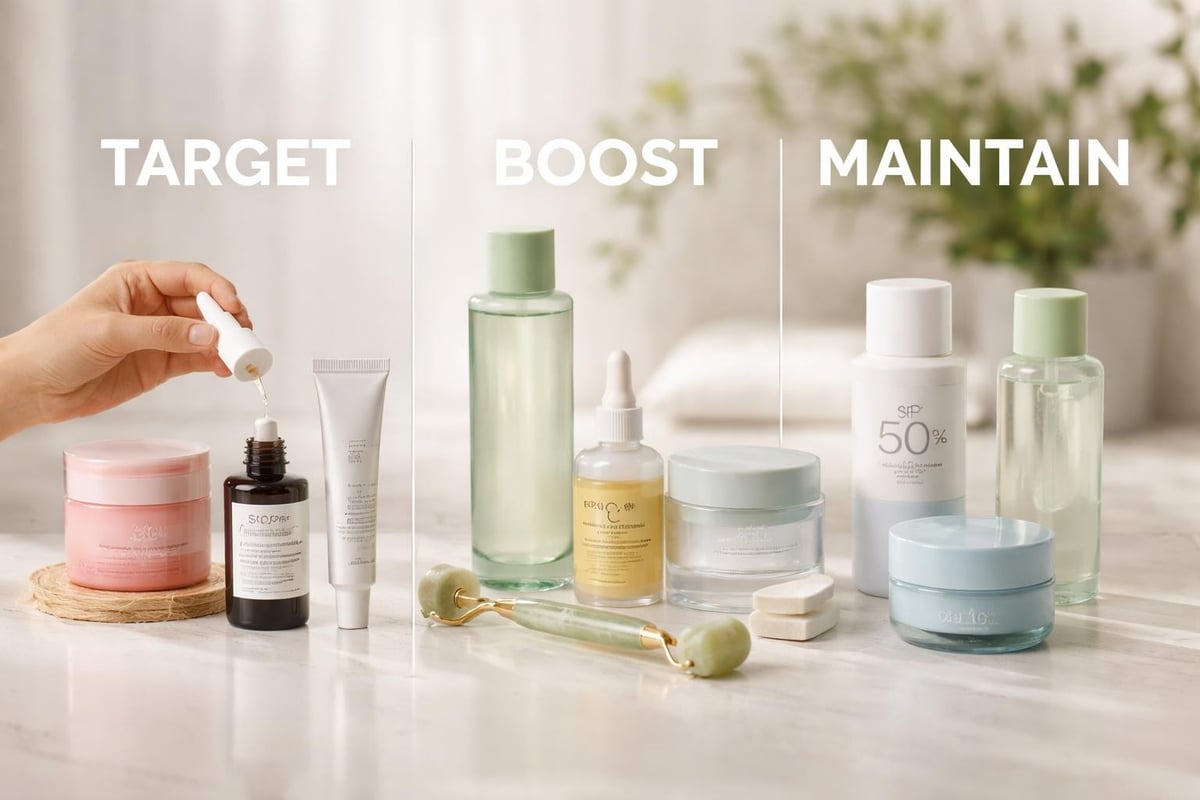
The Target-Boost-Maintain Framework
Rather than following arbitrary step counts, modern Korean skincare adopts functional frameworks that categorise products by purpose. This approach aligns with how professional dermatologists structure treatment protocols.
Target involves identifying specific concerns and applying concentrated treatments directly to affected areas. This prevents over-treating healthy skin while ensuring problem areas receive adequate active ingredients.
Boost refers to whole-face treatments that support overall skin health, enhance barrier function, and prepare skin to respond optimally to targeted interventions. These products provide the foundation that allows targeted treatments to work more effectively.
Maintain encompasses protective and preservative steps that lock in treatments, shield skin from environmental damage, and support long-term barrier integrity. Maintenance products ensure that improvements achieved through targeting and boosting remain stable.
Morning Versus Evening Protocols
Korean skin care products follow different application protocols depending on time of day. Morning routines prioritise protection and preparation, while evening routines focus on repair and treatment.
Morning essentials typically include:
- Gentle cleansing to remove overnight sebum
- Hydrating toner to restore pH balance
- Antioxidant serum for environmental protection
- Moisturiser appropriate to skin type
- Broad-spectrum SPF as final step
Evening protocols often feature:
- Double cleansing to remove daily accumulation
- Exfoliating toner (2-3 times weekly)
- Treatment essence or serum with active ingredients
- Targeted treatments for specific concerns
- Richer moisturiser or sleeping mask
The separation allows photosensitive ingredients like retinol and certain acids to work overnight without sun exposure risks, while antioxidants and UV protection dominate daytime application.
Selecting Authentic Korean Skin Care Products
The global popularity of Korean skin care products has unfortunately spawned counterfeit markets that compromise both safety and efficacy. Choosing authentic Korean cosmetics requires vigilance and knowledge of verification methods.
Verification Strategies
Purchase from authorised retailers: Official brand websites, established platforms like Soko Glam, and licensed physical retailers reduce counterfeit exposure. These channels maintain direct relationships with manufacturers and implement quality control measures.
Check packaging details: Authentic products display batch numbers, manufacturing dates, and expiration dates clearly. Printing quality should be sharp, consistent, and free from spelling errors or grammatical mistakes that often indicate counterfeit production.
Examine ingredient lists: Genuine Korean brands publish complete INCI ingredient lists in both Korean and English. Compare these against official brand websites to identify discrepancies that suggest counterfeit products.
Verify certifications: Many Korean skin care products carry certifications from Korean regulatory bodies. The Korean Ministry of Food and Drug Safety (MFDS) approval indicates products meet safety standards. Look for certification marks and verify them against official databases when possible.
Understanding Labels and Claims
Korean cosmetic regulations require specific labelling standards that help consumers make informed decisions. Functional cosmetics, which include products making claims about wrinkle improvement, whitening, or UV protection, must undergo additional testing and approval processes.
| Label Term | Regulatory Meaning | What It Indicates |
|---|---|---|
| Functional Cosmetic | MFDS approved for specific claims | Clinical testing completed |
| Hypoallergenic | Formulated to minimise allergens | Lower irritation probability |
| Dermatologist Tested | Patch testing completed | Basic safety verification |
| Non-comedogenic | Formulated to avoid pore clogging | Suitable for acne-prone skin |
Understanding these distinctions prevents misinterpretation of marketing language and helps match products to actual needs.
Korean Skincare for Different Concerns
Korean skin care products address virtually every skin concern through specialised formulations. The industry's breadth allows highly customised routines that target multiple issues simultaneously without product conflicts.
Addressing Hyperpigmentation and Uneven Tone
Brightening represents one of Korean skincare's most developed categories. Rather than relying solely on aggressive exfoliants or harsh bleaching agents, Korean formulations combine multiple mechanisms to safely and effectively reduce visible pigmentation.
Key brightening ingredients include:
- Niacinamide for melanin transfer inhibition
- Alpha-arbutin for tyrosinase enzyme blocking
- Tranexamic acid for inflammation-related pigmentation
- Vitamin C derivatives for antioxidant protection
- Liquorice root extract for gentle brightening
These ingredients work through different pathways, allowing lower concentrations of each while achieving cumulative effects that exceed single-ingredient approaches.
Managing Texture and Pore Appearance
Korean skin care products approach texture refinement through exfoliation, hydration, and barrier support rather than aggressive resurfacing alone. This balanced methodology improves texture without triggering defensive barrier thickening that can worsen pore appearance.
Texture management strategies include:
- BHA (salicylic acid) for oil-soluble pore clearing
- PHA (polyhydroxy acids) for gentle surface exfoliation
- Centella asiatica for inflammation reduction
- Hyaluronic acid for plumping hydration
- Peptides for collagen support and skin density
Leading Korean skincare products increasingly combine these ingredients in precisely calibrated concentrations that deliver results without irritation or barrier compromise.
Supporting Sensitive and Reactive Skin
Korean brands excel in formulating for sensitive skin types that react poorly to conventional active ingredients. These products focus on barrier repair, inflammation reduction, and gentle improvement rather than aggressive transformation.
Centella asiatica (also called cica or tiger grass) has become synonymous with Korean sensitive skin care. This botanical ingredient provides anti-inflammatory, wound-healing, and barrier-supporting benefits without sensitisation risks. Many Korean brands have built entire product lines around centella and its active components: madecassoside, asiaticoside, madecassic acid, and asiatic acid.
Anti-Aging and Prevention
The Korean approach to aging emphasises prevention and maintenance rather than reactive correction. This philosophy encourages younger consumers to establish protective routines that delay visible aging rather than waiting for wrinkles to appear before taking action.
Preventive anti-aging focuses on:
- Daily broad-spectrum sun protection
- Consistent antioxidant application
- Barrier maintenance through lipid-rich formulations
- Gentle exfoliation to support cell turnover
- Hydration to maintain plumpness and elasticity
For mature skin, Korean formulations incorporate ingredients like adenosine (a functional cosmetic ingredient approved for wrinkle improvement), retinol derivatives, peptide complexes, and growth factor analogues that support natural repair mechanisms.
The Science Behind Korean Skincare Efficacy
Korean skin care products increasingly back their formulations with clinical research and evidence-based ingredient selection. This scientific rigour separates effective products from marketing-driven launches that prioritise trends over results.
Delivery System Innovations
Simply including active ingredients doesn't guarantee skin benefits. Korean brands invest heavily in delivery technologies that ensure ingredients reach target depths and remain stable throughout product shelf life.
Advanced delivery methods include:
- Liposomal encapsulation for improved penetration
- Cyclodextrin complexing for ingredient stabilisation
- Micro-emulsion technology for enhanced absorption
- Time-release systems for extended active delivery
- pH-optimised formulations for maximum ingredient efficacy
These technologies explain why Korean products often deliver better results despite using lower active concentrations than Western equivalents that rely on high percentages alone.
Clinical Testing Standards
Reputable Korean skin care products undergo multiple testing phases before market release. These include safety testing, stability testing, efficacy studies, and often comparative trials against established products.
Consumer testing panels provide subjective feedback on texture, absorption, fragrance, and visible results. Combined with objective measurements of hydration, elasticity, pigmentation, and barrier function, these studies offer comprehensive efficacy data that guides formulation refinement.
Emerging Trends in Korean Skincare for 2026
The Korean beauty industry continues evolving rapidly, with 2026 bringing several notable trends that reshape product development and consumer expectations.
Microbiome-Focused Formulations
Understanding the skin microbiome's role in overall skin health has driven Korean brands to develop products that support beneficial bacterial populations. These formulations avoid broad-spectrum antimicrobials that disrupt microbial balance, instead incorporating prebiotics, probiotics, and postbiotics that nourish helpful bacteria.
Fermented ingredients serve dual purposes in this context, providing both skincare benefits and microbiome support. Lactobacillus ferments, bifida ferment lysate, and fermented botanical extracts populate many new Korean skin care products launched in 2026.
Sustainability and Clean Beauty Integration
Korean brands increasingly address environmental concerns without sacrificing efficacy. This includes sustainable ingredient sourcing, reduced packaging waste, refillable systems, and waterless formulations that concentrate actives while reducing shipping weight and packaging needs.
Clean beauty has been reinterpreted through a Korean lens that prioritises ingredient safety and environmental impact while rejecting the fear-based marketing that sometimes characterises Western clean beauty movements. Korean clean formulations maintain efficacy through strategic ingredient selection rather than simply eliminating controversial components without adequate replacements.
Technology-Enhanced Product Systems
Korean skin care products now frequently integrate with device-based treatments that enhance active delivery and skin response. LED therapy, microcurrent stimulation, ultrasonic enhancement, and thermal activation represent technologies increasingly designed to work synergistically with topical formulations.
These integrated systems acknowledge that modern skincare extends beyond passive product application. By combining precisely formulated topicals with scientifically validated devices, brands create comprehensive treatment protocols that deliver results exceeding either component alone.
Personalisation and Customisation
The one-size-fits-all approach continues losing ground to personalised formulations based on individual skin analysis. Some Korean brands now offer custom blending services where consumers select base formulations and active boosters based on current skin needs.
This flexibility acknowledges that skin changes with seasons, stress levels, hormonal fluctuations, and environmental conditions. Rather than purchasing entirely new products for each variation, consumers can adjust existing routines through strategic customisation.
Integrating Korean Products with Western Routines
Many consumers discover Korean skin care products while maintaining Western skincare foundations. Successfully integrating both approaches requires understanding compatibility and strategic layering.
Product Order and Layering Logic
Korean products typically follow a thin-to-thick application order, allowing lighter formulations to penetrate before heavier ones create occlusive barriers. This contrasts with some Western routines that prioritise active strength over texture sequence.
Integrated routine structure:
- Cleansing (Korean double cleanse method)
- pH-balancing toner (Korean)
- Treatment essence (Korean)
- Active serum (Western or Korean)
- Targeted treatment (either tradition)
- Moisturiser (either tradition)
- Sun protection (Korean or Western)
This framework accommodates products from both traditions while maintaining logical application order that maximises efficacy.
Avoiding Ingredient Conflicts
Combining Korean skin care products with Western formulations requires awareness of potential ingredient interactions. Certain combinations reduce efficacy or increase irritation risk.
Common conflicts to avoid:
- Vitamin C (L-ascorbic acid) with niacinamide at high concentrations can cause temporary flushing in some individuals
- Retinol with AHAs or BHAs may increase sensitivity beyond tolerance
- Multiple peptide serums from different brands might duplicate or counteract mechanisms
- Overlapping antioxidants may provide diminishing returns rather than additive benefits
Starting with conservative combinations and gradually increasing complexity allows observation of how skin responds to integrated routines.
Price Points and Value Assessment
Korean skin care products span dramatic price ranges, from accessible drugstore options to luxury formulations rivalling prestige Western brands. Understanding what drives pricing helps consumers make value-based decisions.
Budget-Friendly Options
Korean beauty's accessibility represents one of its most appealing characteristics. Many highly effective formulations remain affordable through efficient manufacturing, streamlined packaging, and direct-to-consumer distribution models that eliminate retail markup layers.
Budget Korean products often deliver exceptional value by focusing resources on formulation quality rather than expensive packaging or celebrity endorsements. These products make sophisticated skincare accessible to consumers who cannot justify luxury pricing.
Premium and Luxury Segments
High-end Korean skin care products justify premium pricing through exclusive ingredients, advanced delivery systems, extensive clinical testing, and luxurious sensorial experiences. These formulations often incorporate rare botanicals, biotechnology-derived actives, or patented ingredient complexes unavailable in mass-market products.
Luxury Korean brands also invest heavily in packaging design, creating aesthetically pleasing containers that enhance the ritual experience beyond purely functional application.
Assessing Cost Per Use
Smart consumers evaluate Korean skin care products based on cost per application rather than package price alone. A seemingly expensive serum that requires only two drops per use and lasts six months may offer better value than an inexpensive product used liberally that depletes quickly.
Value calculation factors:
- Product volume and concentration
- Recommended application amount
- Frequency of use (daily versus weekly)
- Expected duration before replacement
- Versatility across multiple concerns or areas
This analytical approach identifies genuine value regardless of initial price point.
Common Mistakes When Using Korean Skin Care Products
Despite the wealth of available information, consumers frequently make errors that compromise results or waste resources when incorporating Korean skin care products into their routines.
Over-Layering and Product Overload
The multi-step Korean routine's popularity has led some consumers to believe more steps automatically deliver better results. This misconception creates overly complex routines that overwhelm skin, waste time, and make identifying effective products difficult.
Skin has finite absorption capacity. Beyond certain thresholds, additional products simply sit on the surface, potentially causing pilling, clogged pores, or barrier disruption through excessive manipulation.
Neglecting Consistency
Korean skin care products work through cumulative effects that develop over weeks or months of consistent application. Sporadic use prevents achieving the gradual improvements these formulations target.
Consistency requirements vary by product type:
- Hydrating products show immediate temporary effects but require consistent use for lasting barrier improvement
- Brightening treatments need 6-8 weeks of daily application for visible pigmentation reduction
- Anti-aging actives demand months of regular use before collagen and elastin changes become apparent
- Texture-refining products require sustained exfoliation cycles to achieve noticeable refinement
Patience and discipline separate successful Korean skincare adopters from frustrated abandoners.
Ignoring Individual Skin Response
While researching popular Korean skin care products provides useful starting points, individual skin response ultimately determines effectiveness. Products that work brilliantly for thousands of users may not suit your specific skin chemistry, barrier condition, or sensitivity profile.
Paying attention to how your skin feels and looks throughout the day provides more valuable feedback than online reviews. Increased sensitivity, unexpected breakouts, or persistent tightness indicate formulation incompatibility regardless of product popularity.
Skipping Patch Testing
Introducing multiple new Korean skin care products simultaneously makes identifying irritation sources impossible when reactions occur. Proper patch testing and gradual introduction allow systematic evaluation of each product's effects.
Effective introduction protocol:
- Test new product on inner forearm for 24 hours
- If no reaction, apply to small face area for three days
- Gradually increase application area over one week
- Wait at least one week before introducing next new product
- Maintain notes on skin response to each addition
This methodical approach prevents overwhelming skin while building an evidence-based routine tailored to your specific needs.
The Future of Korean Skin Care Products
Korean beauty's trajectory suggests continued innovation in formulation science, delivery technology, and consumer customisation throughout 2026 and beyond. The industry shows no signs of slowing its pace of development.
Artificial Intelligence and Skin Analysis
Advanced skin analysis tools using artificial intelligence will increasingly guide product selection and routine design. These technologies assess factors beyond surface observation, including barrier function, inflammatory markers, and microbiome composition, enabling unprecedented personalisation.
Bioprinting and Synthetic Biology
Emerging technologies allow creation of bioidentical ingredients through controlled synthesis rather than plant extraction. This approach ensures consistency, eliminates agricultural variability, and enables sustainable production of rare or endangered botanical actives.
Cross-Cultural Collaboration
Korean brands continue expanding global presence while Western companies increasingly adopt Korean innovation methodologies. This cross-pollination will likely blur traditional distinctions between K-beauty and Western skincare, creating hybrid approaches that combine both traditions' strengths.
The most successful Korean skin care products of the future will balance innovation with accessibility, efficacy with sustainability, and tradition with technology.
Korean skin care products have fundamentally changed how we approach skin health, emphasising structured routines, ingredient integrity, and long-term results over quick cosmetic fixes. Whether you're building your first systematic routine or refining an established regimen, the principles underlying K-beauty offer valuable frameworks for sustainable skin confidence. Routine. Beauty embodies this philosophy through its Target-Boost-Maintain ecosystem, where each precisely formulated product serves one clear role within a disciplined system designed for real life and lasting results.

